
4 Findings
4.1 Relevance
4.1.1 Alignment with Government and Departmental Priorities
The Reconciliation Secretariat fulfills a valued role in supporting government and departmental priorities to advance reconciliation with Indigenous peoples. Its continued relevance is demonstrated by the expanded mandate of the Secretariat over the evaluation period.
Over the last eight years, the Government of Canada has consistently identified reconciliation with Indigenous peoples as an important government priority, primarily through the Speech from the Throne, federal Budget, Budget speeches and mandate letters. Nearly all of the Justice Canada representatives consulted for the evaluation felt that the Secretariat’s activities are consistent with federal and departmental priorities. Many cited the reconciliation agenda and a few cited the mandate letter as examples of this alignment.
Mandate letters for the Minister of Justice and Attorney General of Canada have emphasized the need for a “renewed, nation-to-nation relationship with Indigenous peoples, based on recognition of rights, respect, co-operation and partnership” (2015)Footnote 3; they have identified reconciliation with Indigenous peoples as part of those “issues that matter the most” in which to make progress (2019)Footnote 4; or, in the context of the discovery of unmarked graves and burial sites near residential schools in 2021, the letters have underlined the need to “move faster on the path of reconciliation” by investing in truth, implementing the United Nations Declaration on the Rights of Indigenous Peoples (UNDRIP) and working in partnership with Indigenous peoples to advance their rights (2021).Footnote 5 The most recent mandate letter also emphasized the need to address the profound systemic inequities and disparities present in Canada’s “core institutions” which impact Indigenous peoples along with many other groups in society.
Reconciliation has also been a consistent priority in the federal Budget in 2018, 2019 and 2021, citing issues related to reconciliation and MMIWG. Furthermore, federal communications pertaining to reconciliation have also included a number of justice-specific priorities, such as calling for a “renewed, nation-to-nation, government-to-government, and Inuit-Crown relationship based on recognition of rights, respect, cooperation, and partnership as the foundation for transformative change”Footnote 6 within the Canadian Justice System, or developing an Indigenous Justice Strategy,Footnote 7 among others.
Federal priorities are translated into departmental priorities highlighted in the 2021-22 Departmental Plan which are led by the Reconciliation Secretariat, including: support for the DMCIR, the Department’s response to the TRC Calls to Action, the Department’s response to the MMIWG Calls for Justice, and intentions to continue to collaborate with Indigenous groups on shared justice priorities and on work to address systemic discrimination and the overrepresentation of Indigenous peoples in the criminal justice system.
The 2022-23 Departmental Plan reiterates the Department’s commitment to the DMCIR, the TRC-Calls to Action, the MMIWG Calls for Justice, support for the creation of the Office of the Independent Special Interlocutor and the development of the IJS, most of which is led or coordinated by Reconciliation Secretariat (IRRP ADMO leads in relation to the Independent Special Interlocutor, working closely with Management Sector). As part of its Justice System Support core responsibility, the Department plans to continue “to collaborate with federal, provincial, territorial, and Indigenous governments, national Indigenous organizations (NIOs), and other partners and key stakeholders to accelerate progress on Indigenous-specific justice initiatives and priorities.”Footnote 8
The Reconciliation Secretariat is aligned with federal priorities in three primary areas. First, as a secretariat with dedicated resources for the sole objective of the advancement of reconciliation, it is aligned with a government that has consistently prioritized and recognized the importance of this topic, as outlined above. Second, as a secretariat within Justice Canada with a mandate to lead the coordination of key departmental legal policy initiatives aimed at advancing reconciliation, it is aligned with federal communications on reconciliation that have had a clear focus on a number of justice-specific priorities. Finally, the Secretariat is mandated to support the DM’s participation in the DMCIR and, according to documentation, uses its resources to help “coordinate, organize, and conduct extensive engagement with Indigenous partners, and continue to build concrete relationships… and effectively meet the commitments set out in various policy instruments.”Footnote 9
4.2 Design and Delivery
4.2.1 Evolution and Current Roles and Responsibilities
Since its introduction in 2017, the demand for and nature of the services provided by the Secretariat has changed and increased over time, growing in terms of the number and complexity of Indigenous-related files it undertakes. The Reconciliation Secretariat has been able to effectively respond to these changing demands and roles, although it lacks the capacity to fully take on its role as CoE beyond on an ad hoc manner. This lack of capacity has led to over-burdened staff and managers.
The Reconciliation Secretariat was created in 2017 as the RLPS, located in the office of the DM. At the time, the Secretariat aimed to support the Minister and DM on matters of reconciliation, including acting as the Secretariat for the Government-wide Deputy Ministers Task Force (DMTF) on reconciliation. The Secretariat was responsible for reporting Justice Canada’s progress against the TRC Calls to Action to CIRNAC. It also provided advice and guidance on Indigenous-related laws and policies to the Minister and DM offices. The RLPS’ initial roles also included the development and delivery of training for JUS employees on the 10 Principles in the National Capital Region (NCR) and across regional offices. Since its inception, the demand for and role of the Secretariat has changed considerably and it continues to be tasked with additional responsibilities. Please refer to Figure 1 for a depiction of this evolution.
One role played by the Secretariat since its inception is support to and participation in (and more recently leading) various committees and WGs. In early years, its role was more limited to providing coordination and support, for example for the DMTF starting in 2017 and subsequently the DMCIR. (Note, the DMTF no longer exists). Since then, that role has evolved and grown to where the Reconciliation Secretariat is the chair or co-chair of the following five committees/WGs:
- Interdepartmental IJS WG;
- IRRP Policy Touch-Base;
- Director General Committee on the IJS;
- Departmental Working Group on MMIWG; and
- Congress of Aboriginal Peoples (CAP) Justice and Policing Working Group
The Reconciliation Secretariat also participates on 17 others committees/WGs, including those internal to Justice Canada as well as those that involve OGDs. Its role varies from being the lead Justice Canada representative, responsible for bringing the Department’s perspectives to the table and ensuring coordination and collaboration with OGDs, to participating as a member, sharing relevant information with its partners and bringing back relevant information to the Department. Please refer to Appendix B for a full list of these committees/WGs.
Figure 1: Timeline of the Reconciliation Secretariat

Figure 1: Timeline of the Reconciliation Secretariat – Text version
In 2017, the Reconciliation Secretariat was created as the RLPS. The RLPS was located in the DM’s office, and its role included:
- Supporting the DMTF on reconciliation;
- Reporting on TRC Calls to Action;
- Designing and delivering of the Principles training; and
- Providing advice and guidance.
In 2019, the RLPS was moved to the IRRP and renamed the Reconciliation Secretariat. Its role included:
- Increased role on committee and WGs;
- Supporting the DMCIR
- Reporting on MMIWG and work on the Federal Pathway; and
- Supporting and participating in PBMs and other WGs under political accords.
In 2021, the Secretariat started its work on the IJS and Integrity Funding groundwork and approval. The Secretariat:
- held IJS pre-engagement sessions;
- prepared business case and submission;
- launched the IEF CFP; and
- obtained funding approval.
In 2022, the Secretariat became the CoE on Indigenous engagement and continued its work on the IJS. The Secretariat:
- provided advice, guidance and materials to build capacity at Justice Canada on ad hoc basis;
- issued grants through the IEF and signed a contract with a consultation firm; and
- began Wave 1 of the IJS engagements.
The Secretariat moved to the IRRP in 2019 and was renamed the Reconciliation Secretariat. In the fall of 2019, the Government of Canada started preparing its response to the MMIWG Final Report, which included 231 Calls for Justice. Given the Secretariat’s continuing role reporting on the TRC Calls to Action, it was assigned the responsibility of coordinating Justice Canada’s response to the Calls for Justice. The Secretariat participated in the development of the federal response, led by CIRNAC. This included engaging with external Indigenous and OGD partners and serving as “the face” of the Department at these discussions. The Secretariat also worked closely with Public Safety on the Justice theme section of the Federal Pathway. Working with departmental sector leads, the Secretariat developed and coordinated significant contributions on behalf of Justice Canada to the Federal Pathway to Address Missing and Murdered Indigenous Women, Girls and 2SLGBTQI+ People.Footnote 10
Since 2019, the Secretariat has also been the lead on supporting the DM’s participation in the DMCIR. This is a DM-level committee where key federal initiatives and priorities with respect to reconciliation and the government’s relationship with Indigenous peoples are discussed and paths forward are presented and approved.
After the release of the Principles Respecting the Government of Canada’s Relationship with Indigenous Peoples in the summer of 2017, the DM of Justice mandated the Secretariat to design, develop and deliver training on these principles to all Justice Canada employees.
In 2019, the Secretariat also became the lead for coordinating the Department’s participation in the PBMs, by establishing formal governance structures of engagement between the Government of Canada and the three main National Indigenous Organizations: Assembly of First Nations (AFN), Inuit Tapiriit Kanatami (ITK), and Métis National Council (MNC). The Secretariat also built and maintains working relationships and working groups under the Political Accords with the CAP and the Native Women’s Association of Canada (NWAC).
In 2021, the Minister’s mandate letter included a requirement to develop an IJS to address systemic discrimination and the overrepresentation of Indigenous peoples in the justice system (the IJS was to be developed in consultation and collaboration with Indigenous and provincial and territorial partners). Due to its contributions to the development of the MMIWG Federal Pathway, the Secretariat was asked to lead this whole-of-government file. Throughout 2021, the Secretariat began the work to determine the design of the IJS development process, including holding pre-engagement sessions with NIOs and eventually seeking funding through Budget 2021. The formal funding request was approved by Treasury Board in December 2021, which included the creation of the IEF (under the existing Indigenous Justice Program). Work began on the IJS engagements immediately, with a Call for Proposals (CFP) issued in December 2021, seeking submissions from Indigenous organizations wishing to lead engagements with their constituents. By March 2022, 38 grants had been issued through the IEF.
Throughout the Reconciliation Secretariat’s existence, it has played a role in building the Department’s capacity in engaging with Indigenous partners, through formal training, the development of tools and resources, and the provision of advice and guidance via the committees/WGs it attends or on an ad hoc basis. That role was formalized in the funding request from 2021 when the Secretariat was envisioned as becoming the CoE on Indigenous relations, reconciliation and partnership building with Indigenous partners, supporting and advising senior officials, and the Department as a whole, on key Indigenous related priorities. Both teams within the Secretariat have CoE responsibilities, one for engagement and the other for reconciliation protocols.
Most Reconciliation Secretariat and Justice Canada respondents felt that the Secretariat has been responsive to new demands and roles placed upon it. In terms of the appropriateness of the Secretariat’s design to meet these demands and play these roles, most senior managers and respondents from the Secretariat felt that the design was appropriate. Having said that, most of these respondents also commented that the Secretariat struggles with having the necessary capacity to fulfill its roles and responsibilities. This challenge is felt across both of the Secretariat’s teams, where staff are working long hours and managers are concerned about employee burn-out. The temporary nature of the Reconciliation Secretariat funding was also highlighted by some Secretariat and senior manager respondents as a challenge to recruiting and retaining staff.
To carry out many of its roles, the Reconciliation Secretariat has formed formal and informal relationships with other areas within Justice Canada. These include:
- Within IRRP, liaising with the Aboriginal Law Centre (ALC), Indigenous Justice Revitalization Section, United Nations Declaration Act Implementation Secretariat (UNDAIS)Footnote 11 and CIRNAC/Indigenous Services Canada (ISC) Legal Services Unit.
- Intergovernmental and External Relations Division (IERD), including providing support for FPT-I meetings, particularly regarding MMIWG and the IJS.
- Policy Sector, including the Policy Integration and Coordination Section, the Research and Statistics Division (joint research projects to support IJS), Criminal Law Policy Section, Family Law and Youth Justice (FLYJ) Policy and Programs Branch, to support business cases and coordinate on the delivery of IEF grants, and develop reporting and input into MMIWG and Calls to Action related documents.
- Public Law and Legislative Services Sector (notably the Center for Information and Privacy Law, which has sought the Secretariat’s advice in relation to their policy initiatives).
- Communications Branch, including advising on communications products regarding language, images, tone, etc.
Please refer to Figure 2 in section 4.3.3 for additional details pertaining to these relationships. Most respondents from Justice Canada were satisfied with their interactions with the Reconciliation Secretariat, noting that the Secretariat adds value to committees and the Indigenous-related work overall in terms of the input provided, that Secretariat’s staff are good collaborators/communicators and act as a good partner within the Department, and that the Indigenous staff add value.
4.2.2 Overlap and Role Clarity
Most instances where there could be overlap between the Secretariat and other parts of Justice Canada have been managed through coordination and communication. Having said that, there is still a lack of clarity with respect to the linkage between the IJS and the Pan-Canadian Strategy to Address the Overrepresentation of Indigenous Peoples in the Criminal Justice System (PCSIO). The perception of overlap is exacerbated by the lack of clarity about the Secretariat’s role.
The activities of the Secretariat generally do not overlap or duplicate work conducted by others within the Department. However, some Justice Canada respondents did note areas where they saw potential for overlap in roles, although most of these respondents said that duplication is being managed through communication and coordination. One main area of potential overlap concerns the Department’s work towards developing the PCSIO, which is an FPT initiative led by FLYJ (Policy Sector). Like the PCSIO, the IJS also aims to address the overrepresentation of Indigenous peoples in the criminal justice system in Canada. The work on the PCSIO has been led since 2018 by officials of the FPT Aboriginal Justice Working Group in response to the 2015 Calls to Action. Following the collaborative development of the British Columbia First Nations Justice Strategy in 2020, the IJS was announced as a new Government of Canada priority in the January 2021 mandate letter of the Minister of Justice Canada, provided with dedicated investments for engagement in Budget 2021, and reiterated as an ongoing commitment in the Minister’s mandate letter of December 2021. Both Reconciliation Secretariat and other Justice Canada respondents noted that provinces and territories need to be fully and properly engaged and that the intersections between the PCSIO and the IJS need to be clarified and communicated. Recent discussions at FPT DMs of Justice Canada and Public Safety table have started to bring greater clarity in that regard.
It was also suggested by a few respondents that the CoE role could be overlapping with work of the ALC, which provides expertise in the area of Aboriginal law, and the IERD in the Policy Sector, which is the departmental lead on general stakeholder engagement activities.
The discussion of overlap is important to consider in the context of role clarity. What was evident in the conduct of interviews as part of the evaluation is that the Reconciliation Secretariat’s role is not clear to others within Justice Canada as well as to OGDs. Justice Canada respondents wanted clarity around the factors that determine the distribution of Indigenous-related files amongst Justice Canada groups. Similarly, OGDs were curious about which files the Reconciliation Secretariat is working on versus others at Justice Canada. There are no resources available to stakeholders that describe the Secretariat’s role, nor how it interacts with other groups within the Department. Most Secretariat and senior management respondents acknowledged the lack of clarity and felt that the perception of overlap could be managed with better role clarity and communications.
A few Justice Canada and OGD interview respondents noted some tension from other areas of Justice Canada working on Indigenous files, when the Secretariat has been asked to take over certain files. No respondents explicitly stated this was the case, but this perceived tension was noted enough times that it warrants attention. This could reflect an issue that requires navigating a change management process to ensure a sense of ‘buy-in’.
4.2.3 Diversity and Inclusion
The Secretariat has made an effort to ensure that its team and the work it undertakes reflect the principles of diversity and inclusion. Currently, the Reconciliation Secretariat management and teams are very diverse, including 75% Indigenous representation across all distinctions, as well as regional and gender diversity. The diverse team brings value to the work of the Secretariat.
The Reconciliation Secretariat’s work has emphasized diversity and inclusion. In particular, consistent with the Call to Action on Anti-Racism, Equity, and Inclusion in the Federal Public ServiceFootnote 12, the Secretariat takes a distinctions-based approachFootnote 13 to its work, including the collaborative development of the MMIWG Federal Pathway and the IJS. Above that, however, it has also cultivated relationships with many Indigenous organizations including:
- AFN;
- ITK;
- MNC;
- CAP;
- National Association of Friendship Centres;
- NWAC;
- Les Femmes Michif Otipemisiwak; and
- Pauktuutit Inuit Women of Canada.
To further ensure diverse and inclusive engagements for the IJS, the Secretariat contracted an Indigenous consultation firm to support the design of the overall engagement approach and lead the Justice Canada-led engagements. This approach was viewed positively among respondents from Justice Canada and partners. Secretariat respondents also mentioned that IEF grants were awarded with a view to ensuring diversity among distinctions, regions/provinces, rural/urban and ensuring participation of youth, Elders, women and 2SLGBTQI+.
Diversity and inclusion is also strongly represented within the Secretariat’s team. The plan to recruit, retain and promote Indigenous employees outlined in the Budget 2021 funding request has been implemented. The Reconciliation Secretariat staff now includes 75% Indigenous representation, including from each of the three distinctions, that is women, men, 2SLGBTQ+, and maintains a national team with several staff located outside of Ottawa. Two of three management positions are staffed by Indigenous employees. Indigenous hiring was undertaken in recognition that Indigenous voices and lived experiences are essential in developing appropriate policy responses to reconciliation.
The value of having Indigenous staff working in the Reconciliation Secretariat was recognized by most respondents from Justice Canada who said that Indigenous employees bring their lived experiences and expertise based on their own history to the work of the Secretariat.
4.3 Effectiveness
4.3.1 Contributions to Indigenous-specific priorities
The Reconciliation Secretariat has contributed to many Indigenous-specific files and priorities since its inception. These files/priorities have evolved over time and include coordinating Justice Canada reporting to CIRNAC on TRC Calls to Action and MMIWG Calls for Justice, and advancing joint priorities at PBMs. Of particular mention is the Secretariat’s leadership of Justice Canada’s contribution to the Federal Pathway response to the MMIWG Calls for Justice.
The Reconciliation Secretariat played a significant role in the development of the Justice-specific chapter of the Federal Pathway component of the MMIWG National Action Plan, which “includes actions and commitments to co-develop solutions to ongoing justice issues that impact Indigenous peoples.”Footnote 14 In other words, the Federal Pathway component details the federal government’s promises to end violence against 2SLGBTQI+ individuals and Indigenous women and girls. The Secretariat played a coordination and reporting role, including developing responses on progress made to address the findings of the Calls for Justice. As well, the Secretariat participated in interdepartmental meetings and hands-on work to develop the Federal Pathway. Most partner and Justice Canada respondents provided positive feedback regarding the Secretariat’s role on this file. It was also noted by a few Secretariat and senior management respondents that the Reconciliation Secretariat’s work on the MMIWG file changed how many at the Department view Indigenous files and working with Indigenous partners in terms of working with a greater sense of collaboration and partnership. The Reconciliation Secretariat is also credited with having been able to secure additional resources for Indigenous programming through its work on MMIWG, specifically in coordinating and leading on the Fall Economic Statement 2020 and the Budget 2021 approved funding requests.
The Reconciliation Secretariat’s role in responding to the TRC Calls to ActionFootnote 15 as well as in making evidence-based changes to Indigenous-specific policies, initiatives, programs and legislation pertains primarily to coordination and reporting. For instance, the Engagement Team coordinated and supported Justice Canada’s participation in the PBMsFootnote 16 and participated in and co-chaired the CAP Justice and Policing Working Group under the Canada-CAP Accord. The Coordination and Reporting Team contributed to the Special Interlocutor file (including policy and business case support, and liaising with the Office of the Special Interlocutor). The IJS is also being developed in response to the Calls to Action and MMIWG Federal Pathway commitments. This horizontal initiative is expected to result in additional policy and program developments once it is finalized (although the Secretariat’s role in post-IJS work is not yet known).
4.3.2 Capacity building within Justice Canada
The Reconciliation Secretariat’s CoE role was formalized in 2021. Since then, it has developed guidance (e.g., land acknowledgement, gift-giving and Elders protocol) and responds to ad hoc requests for advice, guidance and presentations. Awareness of this role among Justice Canada respondents is low. The extent to which the Secretariat has built capacity within the Department is unclear.
The Reconciliation Secretariat has been building capacity within the Department since 2018 when it developed and delivered the Principles Respecting the Government of Canada’s Relationship with Indigenous Peoples training. As of 2022, the Secretariat had delivered training to approximately 2,000 employees in the NCR and regional offices. This training work was active from 2018 to 2021. It has been limited since then, largely due to limited capacity.
Its role as a CoE was formalized through the 2021 funding request. Since then, the Secretariat has developed the following guidance material:
- Draft version of an engagement primer (2021)
- Land Acknowledgement Guidance (2022)
- Elder/Knowledge Keeper guidance and Gift-giving protocols (draft pending approval)
In addition to these materials, the Reconciliation Secretariat also responds to requests for advice, guidance and presentations on an ad hoc basis.
The Secretariat’s CoE role is carried out by both Secretariat teams. The Engagement Team is the CoE on engagement, work and Principles training. The Coordination and Reporting Team is the CoE on reconciliation and protocols.
While most Secretariat respondents felt the organization’s design and delivery approach were appropriate, most also commented that there is a lack of capacity to be fully responsive to requests from Justice Canada, resulting in a more reactive ad hoc delivery of this role. This lack of capacity was also acknowledged by all senior managers interviewed for the evaluation.
In terms of whether the Secretariat had built capacity within the Department to consult and collaborate with partners, it is difficult to say since the only evidence available for the evaluation is interview evidence. Justice Canada respondents were modest in their assessment, with some stating the Reconciliation Secretariat had built capacity, and some stating it did not have the necessary expertise for this role. It is important to note that many of those who were interviewed for the evaluation already conduct engagements with Indigenous peoples or work on Indigenous files and thus did not see themselves as the target of capacity building by the Secretariat. A few Secretariat respondents suggested that they are influencing how the Department works with Indigenous peoples by modelling the appropriate approaches (e.g., collaboration on agendas, pre-briefings, respectful protocols, making mental health supports available if applicable).
4.3.3 Contribution to the Department’s Relationships with Partners
The Reconciliation Secretariat is working effectively with its OGD and Indigenous partners. OGDs see the Secretariat bringing value to committees/WGs and the work overall. Indigenous partners recognize that the Secretariat is making sincere efforts in their interactions and relationships with them. There is more work required before the relationship can be deemed a true partnership that respects Indigenous governments’ approaches and timelines or that features joint decision-making. Many of the barriers to this type of partnership are structural and apply to the Government of Canada overall and are not specific to the Secretariat or Justice Canada.
The Reconciliation Secretariat works closely with partners both within and outside the Department. Please refer to Figure 2 for a graphic depicting the nature of these various relationships. The relationships within Justice Canada have already been described in Section 4.2.1, and the relationships with other partners are discussed below.
In terms of working relationships with OGDs, most consulted for the evaluation observed having more interactions with the Reconciliation Secretariat in recent years, particularly through their participation on interdepartmental committees and interactions pertaining to the IJS. The Secretariat also has a reporting relationship with CIRNAC and ISC and has often worked closely with Public Safety (e.g. on MMIWG and IJS). Most OGD respondents were satisfied with their interactions with the Secretariat, noting that it adds value to committees and the work overall, it is a good collaborator/communicator, and is a good partner. A few also noted the expertise offered by Indigenous staff at the Secretariat as bringing knowledge to shared files and value to the relationships.
Working with Indigenous partners has been an important focus of the Department since it began work on the MMIWG Calls for Justice. The Reconciliation Secretariat has regular interactions with NIOs through the PBMs, as well as one-on-one informal conversations. The Secretariat has also developed a relationship with an Indigenous consulting firm through its contract to design and deliver the Justice Canada-led Indigenous consultations for the IJS. Thus, the Secretariat has an indirect relationship with other Indigenous organizations through those Justice Canada-led engagements.
A few Reconciliation Secretariat respondents noted that the work it has done to date is not really “true partnership” (i.e., joint decision-making) but more about laying the foundation (sharing information, joint establishment of processes) for partnership in the future.
Figure 2: The Reconciliation Secretariat’s Relationships with Others
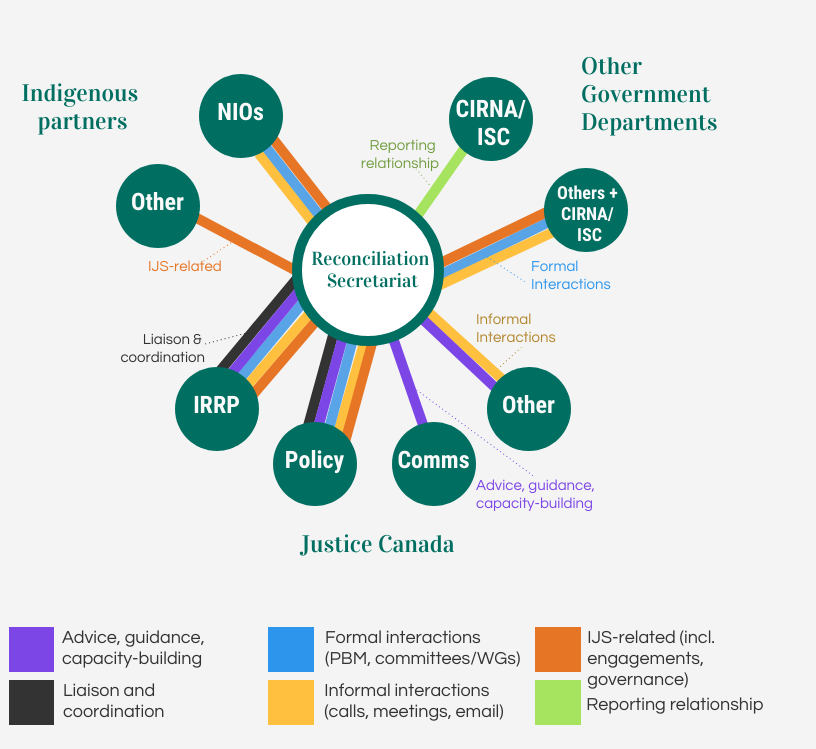
Figure 2: The Reconciliation Secretariat’s Relationships with Others – Text version
| Type of relationship | Partners of the Reconciliation Secretariat | |||||||
|---|---|---|---|---|---|---|---|---|
| Justice Canada | Other Government Departments | Indigenous Partners | ||||||
| IRRP | Policy | Communications | Other | CIRNA/ISC | Others | NIOs | Other | |
| Advice, guidance, capacity-building | X | X | X | X | ||||
| Liaison and coordination | X | X | ||||||
| Formal interactions (PBM, committees/WGs) | X | X | X | X | X | |||
| Informal interactions (calls, meeting, email) | X | X | X | X | X | X | ||
| IJS-related (including engagements, governance) | X | X | X | X | X | X | ||
| Reporting Relationship | X | |||||||
For their part, Indigenous partners consulted for the evaluation believe that the team at the Reconciliation Secretariat is making sincere efforts with respect to relationships with Indigenous partners. For example, the Secretariat worked within the Department to ensure that IEF funding agreements would be grants rather than contributions, which have a higher burden for reporting. As well, in the design phase of the IJS, the Secretariat suggested a partner-led (rather Justice-led) approach to planning, engagement and development of the IJS. Most were satisfied with their interactions with the Secretariat. These respondents recognized a new sense of openness and improved communications through their interactions with the Secretariat. A few partner and OGD respondents specifically mentioned the leadership at the Secretariat as positive since that individual is seen to be driving the open and partnership-building posture of the Secretariat. One partner suggested that there should be more collaboration between Justice Canada and Public Safety to minimize burden.
According to partner respondents, there is still some work to be done on the part of the Government of Canada in terms of understanding or acknowledging Indigenous structures/governments, timelines and consultation approaches and adapting government structures, timelines and approaches to match those of Indigenous governments.
A few Reconciliation Secretariat respondents recognized this limitation and observed that there are many structural barriers imposed by Government of Canada systems/approaches that impede full engagement and participation of Indigenous governments and constituent-representing organizations. These barriers include: 4-year political cycles; Budget/Treasury Board funding cycles; Cabinet confidences; Treasury Board policies; and procurement (e.g., only one Indigenous consultation firm was on the Public Services and Procurement Canada list of pre-qualified firms).
It should also be noted that all partner respondents are working with Justice Canada on the United Nations Declaration Act implementation, being led by the UNDAIS. Therefore the Reconciliation Secretariat is not their only interaction with the Department and some of the comments pertaining to the approach to engagements and the relationship likely apply more broadly than to the Secretariat’s work.
4.3.4 Progress on the IJS
The IJS file has advanced well under the leadership of the Reconciliation Secretariat, conducting a comprehensive engagement to inform the development of the IJS with Indigenous partners, provinces and territories. The Secretariat conducted the groundwork (including pre-engagement sessions with NIOs and developing the funding proposal) and began work immediately after the funding was approved. Many activities have taken place, including issuance of 38 IEF grants, Indigenous- and Justice Canada-led engagements, development of an online learning and activity space, and IJS-related governance/meetings. The engagement phase of the IJS will continue through 2023-24 and the development of the IJS is expected to be completed by March 2024.
The Reconciliation Secretariat has advanced the IJS file to a large extent, including funding to enable Indigenous groups to participate in engagements. See Figure 3 for a summary of the IJS implementation to date.
The Secretariat began the groundwork for the IJS in 2021 when pre-engagement sessions with NIOs were held starting in summer 2021. The Secretariat also started to work on the IJS integrity and IEF funding business case and funding submission that year. The submission was approved December 2021.
With a view to respecting Indigenous governments’ approaches and relationships with their constituents, the Reconciliation Secretariat made efforts to facilitate Indigenous-led engagements through the IEF, although partners further noted that Indigenous organizations were required to apply for funding, something that they indicated should simply be provided.
The CFP for IEF was launched the same month the funding was approved. Through collaborative work by Reconciliation Secretariat and Programs Branch, grants were issued to 38 Indigenous-led engagement procedures. Partners interviewed for the evaluation were pleased that grants were used (rather than contribution agreements), which allow for more flexibility and less reporting burden. Table 2 presents the distribution of IEF funding allocated by distinction and jurisdiction.
Table 2: Distribution of Funding Allocated by Distinction and Jurisdiction (2021-22 to 2023-24 as % of $11M available)
| Categories | First Nation | Métis | Inuit | Indigenous | Total |
|---|---|---|---|---|---|
| National | 13.6 | 6.3 | 1.8 | 10.8 | 32.5 |
| British Columbia | 6.5Footnote 1 of Table 2 | 1.8 | 0 | 0 | 8.3 |
| Yukon/Northwest Territories | 2.7 (Yukon only) | 0 | 3.6 (Both) | 0 | 6.3 |
| Alberta | 4.5 | 1.8 | 0 | 0 | 6.3 |
| Saskatchewan | 5.5Footnote 1 of Table 2 | 1.8 | 0 | 0 | 7.3 |
| Manitoba | 5.5 | 2.3 | 0 | 0 | 7.8 |
| Ontario | 5.5Footnote 1 of Table 2 | 1.8 | 0 | 4.5 | 11.8 |
| Quebec | 3.0 | 0 | 3.6 | 0 | 6.6 |
| Nunavut | 0 | 0 | 3.6 | 0 | 3.6 |
| New Brunswick | 2.7 | 0 | 0 | 0 | 2.7 |
| Nova Scotia | 3.2 | 0 | 0 | 0 | 3.2 |
| Newfoundland & Labrador | 0 | 0 | 3.6 | 0 | 3.6 |
| Total | 52.7 | 15.8 | 16.2 | 15.3 | 100.0 |
A contracting process was launched in early 2022 through Public Services and Procurement Canada to retain the services of a consulting firm to assist with the engagement. A contract was signed with the one Indigenous consultation firm that met all contracting criteria and work began on the engagement strategy by June 2022. Having an Indigenous firm lead the engagement sessions was seen as a key strength by all interview respondents.
Indigenous-led engagements were launched in summer 2022 and Justice Canada led engagement sessions in November 2022. The IEF grants supported organizations to hold their own engagements and participate in Justice Canada-led engagements. Justice Canada-led sessions were planned (in addition to those led by Indigenous organizations) to ensure that all individuals, communities and organizations that wished to provide input had an opportunity to do so.
Twenty-six (26) Wave 1 discussions convening over 500 participants took place between November 1, 2022 and March 21, 2023.Footnote 17 They were focused on two themes with regional distinctions (Inuit, Métis, Northern First Nations, British Columbia First Nations, Prairie First Nations, Ontario First Nations, Quebec First Nations, Atlantic First Nations) as well as women, youth, Elders, 2SLGBTQI+, urban and practitioners. The two themes explored during Wave 1 engagements were:
- Supporting Indigenous Justice Systems; and
- Reforms to the existing Canadian justice system to reduce overrepresentation and systemic discrimination.
Wave 2 engagement was launched on April 11, 2023 with a dialogue session between the Minister of Justice and Attorney General of Canada and Indigenous Elders and Youth. Planning is underway for further Justice Canada-led events over the coming months, which are expected to involve more targeted, regionally based and possibly in-person engagement sessions with Indigenous governments, organizations and communities, provinces and territories, and justice practitioners. Engagements are expected to be held throughout 2023-24, although the drafting of recommendations for the IJS is expected to begin fall/winter2023.
An online learning and activity spaceFootnote 18 has been established and kept up-to-date with IJS information, updates, engagement session registration links, draft documents available for feedback and collaboration opportunities. The online space was created to support participation in the engagement process for the IJS.
IJS governance includes the Director General level Interdepartmental IJS WG for which the Secretariat is co-chair with Public Safety. The WG’s first meeting occurred in April 2022 and it has since been meeting regularly. Meetings held to date have been mostly information sharing, although some discussions regarding potential overlap and complementarity with other initiatives did occur (e.g., MMIWG, First Nations policing legislation engagement, the Federal Recidivism Framework).
Figure 3: Indigenous Justice Strategy Development Timeline

Figure 3: Indigenous Justice Strategy Development Timeline – Text version
2021
- Summer 2021 – Pre-engagement sessions are held with NIOs
- December 2021 – Business case and submission for the Secretariat Integrity and IJS funding are approved
- December 2021 – IEF Call for Proposals is issued
2022
- January 2022 – IEF Call for Proposals is closed
- March 2022 – 38 grants are awarded by end of March
- June 2022 – the Engagement strategy starts (a contract with one firm for IJS engagements is put in place)
- Summer 2022 – Indigenous-led engagements start (led by Indigenous organizations, with the support of the contracted firm and the IEF)
- September 2022 – 26 Justice Canada-led engagement sessions are held by September 2022
Ongoing
- Liaison and Information sharing with committees and WGs (updates to Interdepartmental IJS WG and regular interactions with FPT Aboriginal Justice WG)
Next steps
- Engagements continue to March 2024, with support from the contracted firm.
- Development of the “What we Heard” reports
- Date modified: