
Spotlight on… diversity and inclusion in the legal profession
Like many other sectors of Canadian society, the legal profession is committing itself to furthering diversity and inclusion. One initiative that is aiming to improve access to the profession for persons from diverse backgrounds is the Law Practice Program (LPP) housed at the University of Ottawa. We present here an interview with Ms. Christiane Saad, Executive Director of the LPP:
What is the LPP?
Ms. Saad: The LPP is an alternative way of accessing admission to the Law Society of Ontario and thereby becoming a lawyer. The LPP is offered in French by the University of Ottawa (the English-language program is offered by Toronto Metropolitan University).
What are the founding values of the LPP?
Ms. Saad: The LPP is based on four values: community service, community engagement, linguistic duality, and professional excellence. These values are particularly important, as they play a key role in contributing to maintaining the high standards of learning, competence, and professional conduct that are expected from the legal profession.
What are the objectives of the LPP?
Ms. Saad: The two objectives of the LPP are: 1) to be aware of the obstacles that a candidate may face on her/his/their path to the profession; and 2) to promote professional success. The promotion of linguistic duality is intended to expand the pool of lawyers capable of offering legal services to members of the French-speaking community of Ontario in their language.
What are the great successes of the LPP to date?
Ms. Saad: The successes are intangible but important, such as an inclusive Francophonie that integrates new lawyers from diverse milieus and with varied experiences. Encouraging an active participation in the legal community of lawyers from diverse backgrounds is also among the successes of the LPP.
Thank you, Ms. Saad!
For more information, consult the Law Practice Program web page.
Congratulations to Pulchérie Yalo, winner of Justice Canada’s 2021 National Award for Official Languages

Pulchérie Yalo
The Official Languages Directorate of the Department of Justice congratulates Pulchérie Yalo, who was awarded the national prize in official languages during the department’s virtual 2021 national prize ceremony.
The Official Languages Prize recognizes staff members or teams that encourage the respect of linguistic duality and demonstrate initiative in promoting linguistic duality in the workplace, and who serve as a role model for others.
Pulchérie Yalo, “A Star”
Her peers describe her as “a pioneer,” “a visionary,” “a mentor,” “a role model” and “a star.”
Pulchérie Yalo has taught French as a second language since 2005. She began her career in private schools in the National Capital Region. Next, she completed a series of training courses at the Canada School of Public Service, from where she was recruited to her first position at the Department of Justice.
Joining the department in 2008, Ms. Yalo was a founding teacher in the fledgling Justice Language Training Program. Ms. Yalo’s efforts have encouraged the development of bilingualism among public service employees not only in the National Capital Region, but also in every region of Canada. Ms. Yalo has also been at the forefront of developing the capacity to expand client service nationwide, which required a great deal of research, linguistic knowledge, and professional teaching expertise.
Ms. Yalo, whose teaching methodology is current, deliberate, and effective, pays careful attention to the affective needs of her learners. Although she is neither expected nor compelled to do so, she purchases and compiles a binder of learning materials and resources for each learner in her Ottawa classroom with her own money; such is her commitment to providing her learner-colleagues with a comprehensive learning experience.
Since receiving the award, Ms. Yalo has taken on an interim role in the newly created position of team leader for the language training program. Her dynamism and vision for the program’s evolution to meet the needs and demands of the department continues.
Congratulations again to Pulchérie Yalo!
Official languages in the North
In Canada, only one province has official bilingual status (New Brunswick). But what about the territories?
The three territorial governments are exempt from the application of the federal Official Languages Act (OLA), but all have adopted laws to govern the use of English and French. Although not constitutional in nature, these territorial language laws can neither be repealed nor can the rights and privileges they provide be diminished in any other way without the approval of Parliament. Beyond the status granted to English and French, the territorial language laws also recognize the importance of Indigenous languages. In two of the three territories, some indigenous languages are also official languages.
Yukon: In Yukon, language rights sparked some controversy before the courts in 1983 when a taxi driver from Whitehorse challenged a traffic offence on the grounds that it violated the Canadian Charter of Rights and Freedoms because the territorial ordinance was printed and published in English only; the application was dismissed in trial court and on appeal: R. v. St. Jean, [1986] Y.J. No 76, 2 Y.R. 116. Despite this, the decision led to a serious discussion on the situation of the French language in the two territories at the time (Yukon and Northwest Territories (NWT)).
At that time, the federal government was working on drafting a new federal OLA and the issue of whether the OLA would apply to the two territories was raised. Ultimately, Yukon adopted a law to protect English and French in 1988: the Languages Act. In return, Parliament, in the federal OLA of 1988, granted an exemption to all Yukon (and NWT) government institutions. The federal government also agreed to pay the costs associated with the implementation of the Languages Act.
Northwest Territories: In 1988, the NWT also adopted its own Official Languages Act (NWT OLA), also funded by the federal government. The NWT OLA recognizes 11 official languages in its territory: English and French, but also Chipewyan, Cree, Gwich’in, Inuinnaqtun, Inuktitut, Inuvialuktun, North Slavey, South Slavey and Thcho. In Fédération franco-ténoise v. Attorney General of Canada (2008), the Court of Appeal of the NWT concluded that the NWT OLA was adopted to resolve uncertainty surrounding official bilingualism in NWT, and that the history of the Act reflects the federal commitment to promoting respect for official languages across the country, and that the NWT used the opportunity to promote the use of Indigenous languages.
Nunavut: In 1999, newly created Nunavut adopted its own Official Languages Act which, in the beginning, was identical to that of the NWT. This Nunavut law was eventually amended in 2008 to better reflect the demolinguistic reality of the territory, notably by protecting the Inuit, English, and French languages as official languages of the territory. Most of the Act came into force in 2013 and it mentions that the Act has a quasi-constitutional status in law.
A leader committed to access to justice in French passes the torch: Andrée-Anne Martel, former Executive Director of the AJEFO, is ready for new challenges
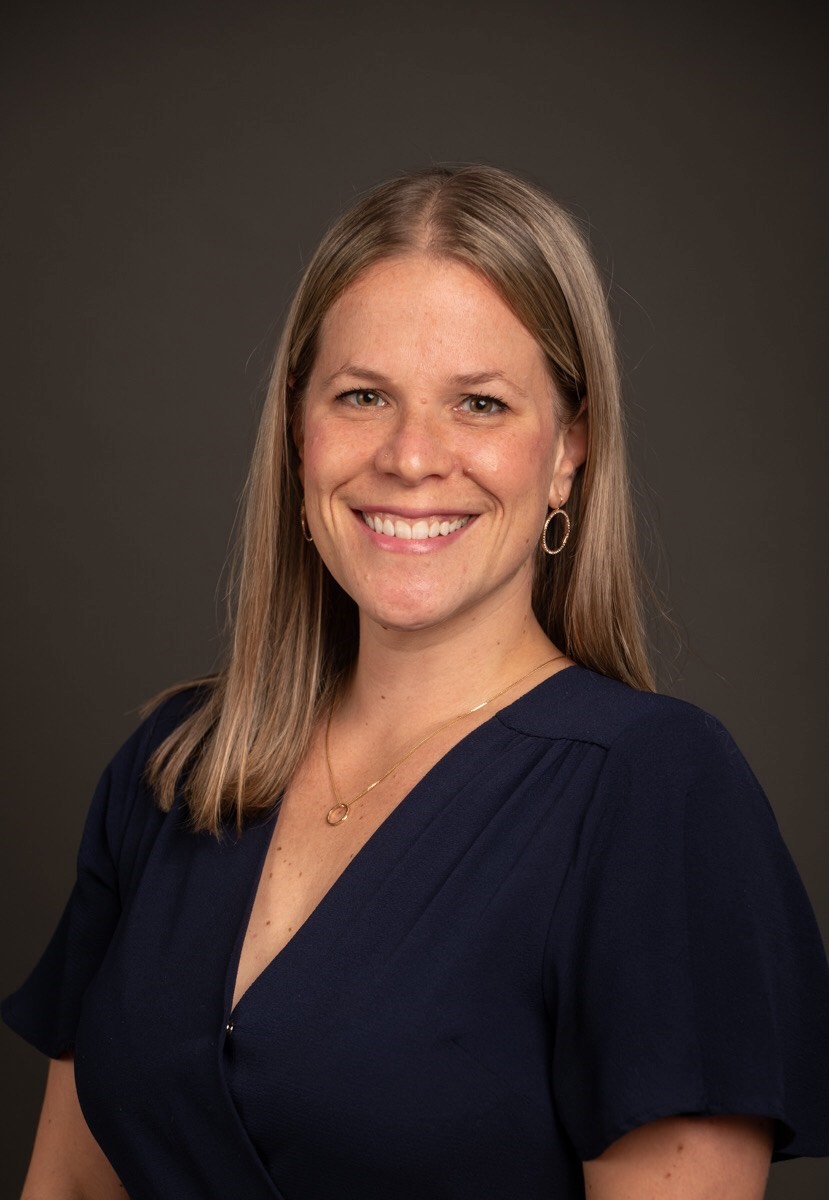
Andrée-Anne Martel
On January 24, 2022, the board of directors of the Association des juristes d’expression française de l’Ontario (AJEFO) announced the departure of its executive director, Andrée-Anne Martel. Ms. Martel has been the AJEFO’s executive director since 2014, where she also worked as a project manager from 2012 to 2014.
Ms. Martel devoted nearly 10 years to the AJEFO’s mission of facilitating an equal access to justice in French for everyone, everywhere in Ontario. This is a wonderful opportunity to highlight Ms. Martel’s outstanding contributions to the Franco-Ontarian community.
Throughout her mandate as executive director, Ms. Martel demonstrated leadership in carrying out a number of ambitious projects that have had a real impact on the French-speaking community in Ontario and across the country. According to Mr. Marc Sauvé, former president of the AJEFO, [translation] “For over seven years as executive director, Ms. Martel showed leadership in all of the projects she led for both the legal community and individuals.”
The long list of impressive achievements accomplished during Ms. Martel’s mandate includes the opening of the Ontario Legal Information Centre (the Centre) in January 2015. The Centre offers a free 30-minute meeting with a lawyer to anyone in Ontario facing a legal issue. For reference purposes, the Centre served 2,206 individuals in 2020–2021, despite the challenges caused by the pandemic.
Ms. Martel also helped create and develop several innovative websites that provide free legal and terminology services in French and that are available to everyone. These include TesDroits.ca, a website providing legal resources for Ontario teens, and Jurisource.ca, a portal for professionals working in common law provinces and territories. There is also CliquezJustice.ca, a website that helps members of the public to better understand their legal rights and obligations through simplified information. It includes content specifically designed for Francophone minorities in Canada (outside Québec) as well as resources adapted for children, teens, and teachers. This website regularly receives over 60,000 visits a month.
Ms. Martel also managed the “Camps en justice” from 2014 to 2018, as well as eight annual conferences of the AJEFO. Together, these initiatives provided the opportunity for hundreds of young people and professionals to develop their legal skills in French. Under her leadership, the AJEFO also developed several additional legal resources, including online learning modules on criminal law.
In recognition of her exceptional contributions to the Franco-Ontarian community, Ms. Martel was named a finalist for the prestigious Prix Bernard Grandmaître in 2018. This prize is awarded each year to an individual who has had an impact on Ottawa’s Francophone community through their commitment and leadership.
“Throughout her career, Ms. Martel has shaped the AJEFO through her ability to engage her team and her motivation to move things forward, out of love for access to justice,” said Ms. Alexandra Waite, deputy executive director of the AJEFO. “We are lucky that the AJEFO was able to benefit from her spirit of collaboration and leadership over the years,” she added.
Thanks to this spirit of collaboration, Ms. Martel built strong relationships with the AJEFO’s partners at the federal, provincial, and community levels. Sabine Derbier, French Language Services Coordinator for the Government of Ontario’s justice sector ministries, said: “One of Ms. Martel’s great strengths is her ability to build partnerships and mobilize key justice partners on common projects while demonstrating flexibility and creativity. These great qualities have allowed her to bring to completion several innovative and original flagship initiatives, specific trainings, resources, and legal tools made available across the country. Under her leadership, the AJEFO has developed a wide range of expertise that will enable it to continue to innovate and enhance access to justice in French.”
Ms. Derbier added: “We are privileged to have collaborated with Ms. Martel on a number of projects aimed at improving access to justice in French, whether in the context of the Ottawa and Sudbury Legal Information Centres, or the development of training initiatives aimed at professionals in Ontario’s justice sector ministries, including the development of e-learning modules for criminal law based on the training materials of the Institut de développement professionnel en langue française.”
Ms. Martel also maintained an excellent relationship with Justice Canada. In particular, she successfully carried out several large-scale projects that received funding from the Access to Justice in Both Official Languages Support Fund, and she distinguished herself as a member of the Advisory Committee on Access to Justice in Both Official Languages.
Moreover, she also shared her expertise with elected officials by appearing before parliamentary committees to explain the specific issues related to access to justice for official language minority communities.
For their part, her former colleagues on the AJEFO’s board of directors have also expressed their great appreciation for Ms. Martel’s work. Ms. Nadia Effendi, a partner at Borden Ladner Gervais LLP and former president of the AJEFO said, [translation] “During my mandate as President, I saw Ms. Martel’s hard work, her unparalleled leadership and, above all, her love for the legal community and access to justice, and the Franco-Ontarian community. With her energy, enthusiasm, and sound decisions, she boosted the AJEFO’s image and increased its presence in the community.”
According to Mr. François Baril, a partner at Gowling WLG and former president of the AJEFO: [translation] “Andrée-Anne took on a significant challenge when she became the head of the AJEFO in 2014: a move to a new office, a new legal information centre, sometimes short-lived funding, a growing team, and a new president. Seven years later, we can see that she rose to the challenge and more. During her mandate, Andrée-Anne not only steered the organization but also made it shine in Ontario and beyond. Innovator, director, ambassador, and, especially, collaborator, Andrée-Anne leaves behind an organization that is relevant and credible, not only to its members, but also to its government and community partners. Congratulations and thank you!”
For her part, Ms. Martel said: [translation] “My 10 years at the AJEFO were absolutely unforgettable. It was a true privilege to be part of the team and to have been part of the success of projects like the Legal Information Centre, CliquezJustice.ca and Jurisource.ca, which have a real impact on Canadians and improve access to justice in French in a concrete way. The AJEFO’s achievements over the past 10 years must absolutely be credited to its dedicated and talented staff, and to its partners like the Department of Justice, which has had faith in the AJEFO from the beginning. I would like to thank the Department of Justice for its rich exchanges and openness over the past 10 years.”
Although she is leaving her position at the AJEFO, Ontario’s Francophone community will still be able to count on Ms. Martel’s energy and expertise for a long time to come. Her next challenge will be leading the Vanier Community Services Centre, based in Ottawa.
The Department of Justice Canada would like to thank Ms. Martel for her significant contributions to access to justice in both official languages and wishes her the best of success in her new role.
Please visit the AJEFO’s website to learn more about its activities.
National virtual Conference on Language Rights in Prosecutions
While the first ‘Conference on Language Rights in Prosecutions’ was to be held on March 28 and 29, 2020 in Ottawa, it ended up being cancelled because of the COVID-19 pandemic. Ultimately, the conference was held virtually on September 28 and 29 and October 27 and 28, 2021.
Organized by the Department of Justice Canada and the Public Prosecution Service of Canada, in close collaboration with the Director of Criminal and Penal Prosecutions of Quebec and the Ministry of the Attorney General of Ontario, more than 300 people from across Canada registered for one, two, three or all four half-day sessions of the conference. The participants were mainly federal and provincial Crown attorneys but also included defence counsel, counsel from various levels of government, and a few judges.
One of the objectives of the conference was to mark the 30th anniversary of the coming into force of Part XVII (Language of the Accused) of the Criminal Code in all provinces and territories in 1990. Part XVII recognizes the right of an accused to a Crown attorney and a judge or judge and jury who speak the official language of the accused or, if the circumstances warrant, both official languages.
The four sessions included eight panels on various legal issues, in particular provincial and territorial language regimes, bilingual and unilingual trials, before and after R. v. Beaulac, unrepresented accused, jury selection, the Gladue principles, and potential extensions of language rights and obligations in criminal and penal prosecutions.
Each session also featured a guest speaker, such as the Honourable Paul Rouleau, Ontario Court of Appeal, Kathleen Roussel, Director of the Public Prosecution Service of Canada and Deputy Attorney General of Canada, Susan Kyle, Assistant Deputy Attorney General of Ontario, and Martin Chalifour, Chief Prosecutor, Montreal Region, Director of Criminal and Penal Prosecutions of Quebec.
In addition, a number of panellists were from the judiciary, including the Honourable Chief Justice Mary Moreau, Court of Queen’s Bench of Alberta, the Honourable Justice Michèle O’Bonsawin, Ontario Superior Court of Justice, the Honourable Justice Anna Loparco, Court of Queen’s Bench of Alberta, and the Honourable Justice Julie Bourgeois, Ontario Court of Justice.
Bill C-78 has been passed and new language rights created!
Federal family law has not been significantly updated in over 20 years. Bill C-78, An Act to amend the Divorce Act, the Family Orders and Agreements Enforcement Assistance Act and the Garnishment, Attachment and Pension Diversion Act and to make consequential amendments to another Act, has come into force. The bill received Royal Assent on June 21, 2019.
The Bill makes a range of amendments to the Divorce Act.
The purpose of this article is to briefly introduce the new language rights provision, inserted in subsection 23.1 under the subtitle “Official languages”.
We begin with subsection 23.1(1), which provides that proceedings under the Divorce Act may be conducted in English, French, or both languages. It should be noted that the reference to “proceedings under the Act” refers to divorce proceedings, corollary relief proceedings and variation proceedings. This right to have such proceedings conducted in French, English, or both languages is somewhat similar to the right available to accused persons under section 530 of the Criminal Code for criminal proceedings. Moreover, as we shall see below, the other language rights and obligations set out in the Act mirror to some extent the rights and obligations found in the Criminal Code.
For example, subsection 23.1(2) is similar to section 530.1 of the Criminal Code—both provisions set out the various rights and corollary obligations that will apply when a proceeding is heard in a minority language or in both languages.
First, under paragraph 23.1(2)(a), any person will have the right to use the official language of her/his/their choice when filing pleadings or other documents (such as an expert report, for example). They will also have the right to use the official language of their choice when giving evidence. Similarly, the person will be able to present her/his/ their case in either official language in a trial proceeding.
Under paragraph 23.1(2)(b), the court will be required, at the request of any person participating in a proceeding under the Act, to provide simultaneous interpretation from one official language to the other.
Paragraph 23.1(2)(c) guarantees any party, in any action at first instance, the right to have a judge who speaks the same official language as the party or both official languages, as the case may be. In other words, if the parties choose different official languages, the trial judge must be bilingual and speak both official languages.
New paragraph 23.2(1)(d) deals with transcripts. It gives any party to a proceeding the right to request a transcript or recording of the proceeding in the original official language, if the words were recorded by a court reporter or by a sound recording device. The parties also have the right to request a transcript or recording of any interpretation into the other official language of what was said.
The final right created by subsection 23.2(2) relates to judgments and orders. Paragraph (e) imposes an obligation on the court, if a party to a proceeding so requests, to make available to that party any judgment or order made under the Act in the official language of the party’s choice.
As is the case with the Criminal Code, the new Divorce Act also contains a provision on forms. Subsection 23.2(4) provides that court forms for proceedings under the Act must be available in both official languages.
Taken together, these new provisions will allow any person in Canada to divorce in the official language of her/his/their choice, regardless of the province or territory in which they reside. This is undoubtedly a new step in a process that goes back to the Constitution Act, 1867, and whose purpose is to improve access to justice in both of Canada’s official languages.
According to Daniel Boivin, President of the Fédération des associations de juristes d’expression française de common law (FAJEF), [translation] “the fact that the right to divorce in French is now recognized in Bill C-78 is as historic and significant for judicial bilingualism in Canada as the recognition, in the past, in the Criminal Code of the right to have a criminal trial in the official language of one’s choice in all provinces and territories.”
It is important to understand that these are only a few examples of the changes that were brought about by Bill C-78. However, as you may have gathered (especially from the length of the title!), Bill C-78 was intended to fill many other gaps. For example, the Bill also sought to promote the best interests of the child, to help address domestic violence, to improve access to justice and the efficiency of Canada’s family justice system, and to support poverty reduction efforts.
A final word on the coming into force of Bill C-78. It should be noted that the bulk of the amendments to the Divorce Act came into force on March 1, 2021. That said, with respect to the new language rights that were inserted, Bill C-78 provided for a phased-in approach by offering the possibility of different coming into force dates for each province and territory, depending on their readiness to implement it.
In its June 2019 press release, the Association des juristes d’expression française de l’Ontario (which, like the FAJEF, was pleased with these important advances in access to justice in both official languages) stated that it was looking forward to the coming into force of the new language provisions. At the time of writing, we are pleased to announce that the language provisions have come into force in Ontario, Manitoba, Saskatchewan, Yukon, and Nunavut.
If you have any questions about the new language rights in the Divorce Act, please contact the Family Law and Youth Justice Policy Section and/or the Official Languages Directorate.
Announcements
New Official Languages Champion
Since our previous edition, Jacinthe Bourdages, General Counsel and Director of the Official Languages Directorate, was named Departmental Champion of Official Languages for Justice Canada. Ms. Bourdages has worked for the Department of Justice Canada since 1999, and as part of the Official Languages Directorate since 2018. Congratulations, Ms. Bourdages!
New Director General of the Association des juristes d’expression française du Manitoba
In December 2021, Mr. Tarik Daoudi was named Director General of the Association des juristes d’expression française du Manitoba (AJEFM). Taking up the mantle of his predecessor, Mr. Guy Jourdain, Mr. Daoudi was trained in law in Manitoba. He previously worked as a lawyer-project officer at Infojustice Manitoba within the AJEFM. Congratulations, Mr. Daoudi!
In memoriam: Senator Josée Forest-Niesing (18 december 1964 - 20 november 2021)
Senator Josée Forest-Niesing was a great ally of access to justice in both official languages and of everything related to the Canadian Francophonie. She proudly represented the interests of Franco-Ontarians in the Sudbury region as a lawyer and as a senator. She will also be remembered for her vigorous defence of Laurentian University, an institution that supports the Francophone community of northern Ontario. Respectful and respected, she was also a Deputy Judge of the Small Claims Court of the Ontario Superior Court of Justice. Her service to the legal community was exemplary, as president of both the Association des juristes d’expression française de l’Ontario from 2002 to 2004 and of the Fédération des associations de juristes d’expression française de common law. Among her other achievements, she was also one of the founders and the first president of the Centre canadien de français juridique (based in Winnipeg). She was also heavily involved in promoting the interest of Francophones with the Ontario Bar Association. Her contributions to official languages and to the law will never be forgotten.
OL quiz
How many bilingual regions (language of work) are there in Canada? a) 4 b) 6 c) 8
Answer: b) 6
There are 6 bilingual regions (language of work) in Canada: the National Capital Region, the Province of New Brunswick, Montréal, other parts of Québec, Eastern Ontario, and Northern Ontario.
Subscribe
If, unlike our subscribers, you are not receiving the newsletter online, register to be on our distribution list! To subscribe, communicate with:
Justice in Official Languages
Official Languages Directorate
Public Law and Legislative Services Sector
Department of Justice Canada
Telephone: 613-946-3120
jol@justice.gc.ca
JOL webpage
- Date modified: