
4. Findings
This section of the report synthesizes the evaluation findings. The analysis is based on information that emerged from all lines of evidence. It begins with an assessment of the relevance of the legislative services offered by the LSB and the Finance LSU, including trends in the demand for these services. It also explores the design and delivery of the current service delivery structure, the effectiveness of the services delivered, including their quality, as well as the efficiency of the services.
4.1 Relevance
4.1.1 The Provision of Legislative Services Aligns with Departmental Priorities
The provision of legislative services is anchored in the mandate of Justice Canada. These services enable the federal government to proceed with its legislative priorities.
One of Justice’s core responsibilities is to provide high-quality legal services. As noted in the overview of legislative services (see section 2), having a centralized group with expertise in legislative drafting has been a critical component of the overall support that the Department provides to the federal government, and to each department and agency engaging in legislative initiatives. An overarching benefit of this approach is ensuring consistency in drafting federal laws and regulations.
While this evaluation focuses specifically on the contribution of the LSB and of the Finance LSU, the role of Justice expands beyond these activities and includes, among other things, all the legislative support that LSUs provide, along with the advisory work provided by centres of expertise or other groups within Justice.
In this context, legislative services are not only aligned with the departmental priorities of Justice, they are directly embedded in the mandate of the Department. These services are also a key enabler that allows the federal government to advance those initiatives and priorities that require legislative or regulatory support.
4.1.2 The Demand for and Complexity of Legislative Services have Increased
During the period covered by the evaluation, the demand for legislative services increased in volume and complexity. At the same time, the timeframe allocated to complete the drafting process has decreased.
In exploring the trends that emerged in the demand for and the risk and complexity of legislative services, this evaluation covers a unique period that includes the COVID-19 pandemic. Responding to this public health crisis required unprecedented legislative and regulatory measures that shaped many of the findings presented in this sub-section. In addition to these priorities, the federal government pursued other significant initiatives that also had an impact on the demand for legislative services.
Trends in the Volume of Demand for Services
Trends within the LSB
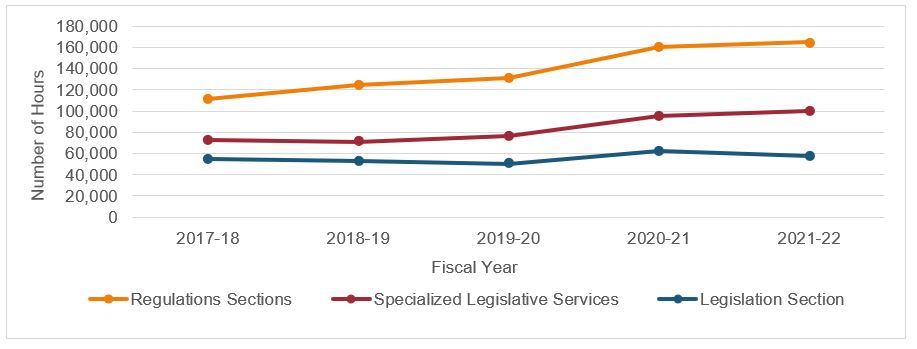
As illustrated in Figure 5, the number of hours recorded by the three main LSB groups has trended upward during the evaluation period, with a sharper increase occurring during the FYs marked by the COVID–19 pandemic.
(Source: LEX)
Text version
| Fiscal Year | Number of hours from the Regulations Section | Number of hours from the Specialized Legislative Services | Number of hours from the Legislation Section |
|---|---|---|---|
| 2017-18 | 111,758 | 72,567 | 54,556 |
| 2018-19 | 124,887 | 71,027 | 53,044 |
| 2019-20 | 131,096 | 76,118 | 50,502 |
| 2020-21 | 160,581 | 95,099 | 62,082 |
| 2021-22 | 164,911 | 99,649 | 58,071 |
The data shows a 37% increase in the number of hours recorded between FY 2017-18 and 2021-22 for the SLSS, followed by the Regulations Sections (48% increase). As for the Legislation Section, there was a 6% increase in number of hours recorded during the evaluation period, with a notable increase of 23% between FY 2019-20 and 2020-21.
Survey findings reflect these trends. Just over two-thirds (67%) of respondents from the LSB noted that the volume of requests for services had increased over the period covered by the evaluation. This view was even more predominant among respondents who had been with their respective LSB sections for more than 15 years, as 79% of those respondents noted an increase in demand over the past five years. Considered from the perspective of representatives from sponsoring departments and agencies, the views are largely the same, as 72% of survey respondents from that group noted that they had been involved in an increasingly higher number of requests for legislative services.
Interviews provided an opportunity to further define the factors behind the increase in demand for services. Respondents first confirmed the predominant impact that the COVID-19 pandemic has had, which affected more directly those involved in public health and other associated initiatives that dealt with the pandemic. However, other significant events were noted, such as the initiatives related to the reconciliation process with Indigenous peoples, the war in Ukraine, the legalization of cannabis, or the disruptive protests related to pandemic-related measures.
More generally, interview findings suggest that, during the evaluation period, the federal government has been pursuing a wide range of priorities simultaneously, particularly those included in respective mandate letters issued to each federal minister, which led to a steady and increasing number of requests for services.
Trends within the Finance LSU
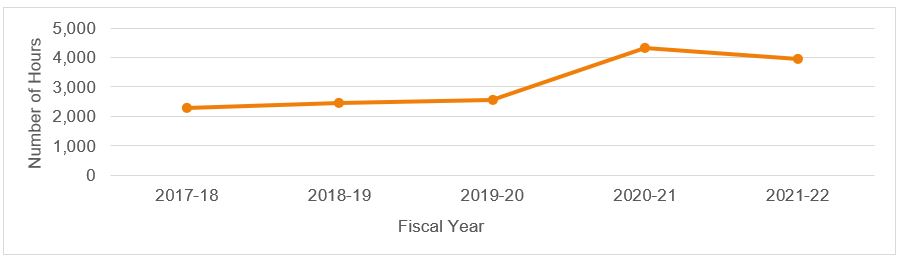
The demand for legislative support from the Finance LSU also increased by 73% during the period covered by the evaluation with a surge that coincided with the COVID-19 pandemic (see Figure 6).
(Source: LEX)
Text version
| Fiscal Year | Number of Hours |
|---|---|
| 2017-18 | 2,294 |
| 2018-19 | 2,458 |
| 2019-20 | 2,553 |
| 2020-21 | 4,325 |
| 2021-22 | 3,962 |
During interviews, representatives from the Department of Finance emphasized that many of the pandemic relief initiatives have involved taxation measures, which had to be promptly established. In addition, uncertainties around the economic impact of the pandemic have led to several significant fiscal measures. Finally, the work on other fiscal initiatives that had to be set aside during the peak of the pandemic has also resumed, further contributing to this increase in requests for legislative services. As previously noted in the description of the process used by the Department of Finance, this increase in the legislative work has involved both Department of Finance drafters and the Finance LSU.Footnote 12
Trends in the Risk and Complexity of Demands for Services
The LSB and the Finance LSU are involved in a wide range of legislative services whose scope and nature vary significantly, ranging from relatively simple amendments to legislative projects of high risk and complexity.
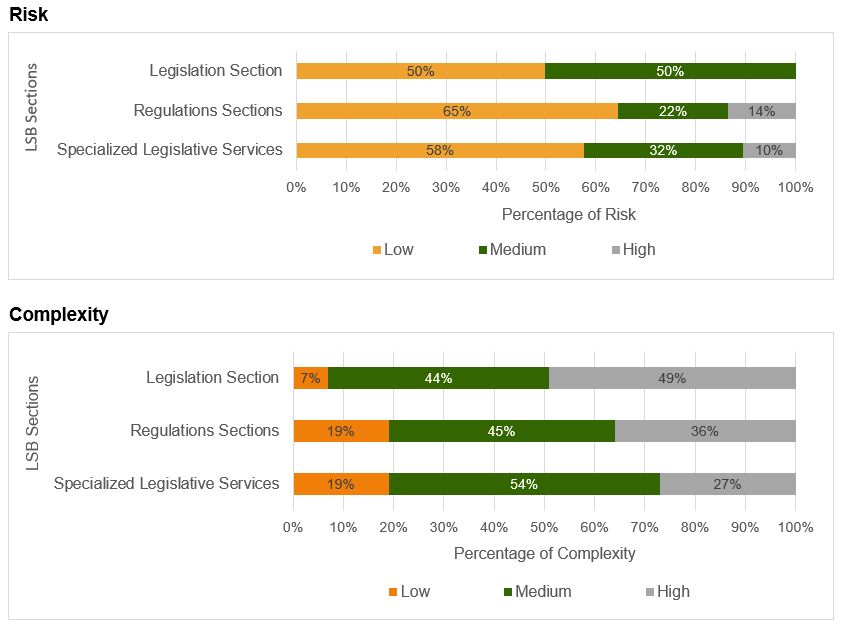
Using the FY 2021-22, Figure 7 illustrates the distribution of risk and complexity levels associated with files in which a risk and complexity assessment had been completed.Footnote 13 It indicates that the vast majority of time spent by LSB involves work on files of low risk but medium to high complexity. The Finance LSU also demonstrated a similar trend in terms of complexity; however, they spent more of their time on higher risk files relative to the LSB. As part of the previous Evaluation of the Legislative Services Branch (2013), a recommendation was included to consider options to collect risk and complexity information on all drafting files. At the time, LSB did not record risk and complexity data in iCase and trends could not be assessed. The LSB has taken action on this recommendation, which included the development of guidance materials, in consultation with LSB managers, in order to assist legislative counsel in determining a file’s appropriate risk and complexity level. This has allowed the current evaluation team to identify trends in risk and complexity.
(Source: LEX; includes only LSB hours that were attributed a complexity level)
Text version
Risk
| LSB Sections | Level of Risk | Percentage of Risk |
|---|---|---|
| Legislation Section | Low | 50% |
| Medium | 50% | |
| Regulations Section | Low | 65% |
| Medium | 22% | |
| High | 14% | |
| Specialized Legislative Services | Low | 58% |
| Medium | 32% | |
| High | 10% |
Complexity
| LSB Sections | Level of Complexity | Percentage of Complexity |
|---|---|---|
| Legislation Section | Low | 7% |
| Medium | 44% | |
| High | 49% | |
| Regulations Section | Low | 19% |
| Medium | 45% | |
| High | 36% | |
| Specialized Legislative Services | Low | 19% |
| Medium | 54% | |
| High | 27% |
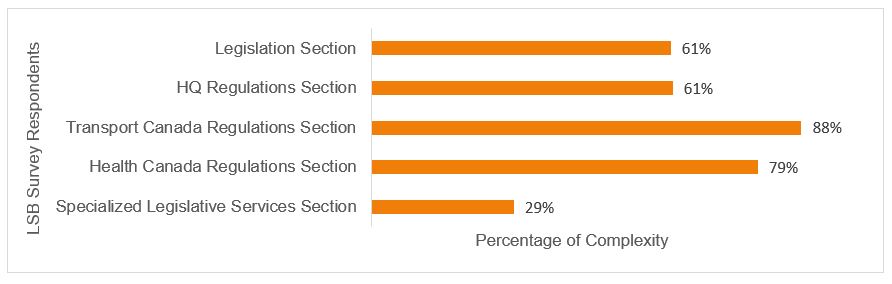
As for the trends over the evaluation period, findings point to a number of areas where the complexity in demands has increased. For instance, over half (56%) of LSB survey respondents were of the opinion that the level of complexity of the files they have been involved in over the past five FYs has increased. As illustrated in Figure 8, this trend was more pronounced in some of the sub-groups, including the Transport Canada and the Health Canada Regulations Sections that have been particularly engaged in measures adopted in response to the COVID-19 pandemic.
(Source: LSB survey, 2022)
Text version
| LSB Survey Respondents | Percentage of Complexity |
|---|---|
| Specialized Legislative Services Section | 29% |
| Health Canada Regulations Section | 79% |
| Transport Canada Regulations Section | 88% |
| HQ Regulations Section | 61% |
| Legislation Section | 61% |
Representatives from sponsoring departments and agencies who participated in the survey also echoed this overall trend. Close to half of them (48%) noted an increase in the complexity of the demands for legislative services in which they had been involved over the past five FYs, whereas 36% indicated that it had remained about the same and 16% did not provide an assessment.
Interview findings indicate that the COVID-19 pandemic raised challenges that have contributed to the complexity of the work undertaken by many members of the LSB. For instance, the Health Canada and Transport Canada Regulations Sections have been involved in over 200 interim and emergency orders issued since February 2020. Legal counsel noted that the initiatives pursued in response to the pandemic have required innovative and unprecedented uses of statutory instruments to establish and enforce these measures.
Beyond the pandemic-related initiatives, the federal government has also pursued complex initiatives that often involved new areas of the laws and that engaged a wider range of stakeholders within and outside of the federal government. During interviews, key informants discussed the complexity of a number of projects. It concerns, for example, those legislative projects related to the environment (e.g., implementation of the carbon tax), the reconciliation process with Indigenous peoples, where a collaborative drafting approach involving Indigenous partners has been used to develop and amend relevant laws and regulations, the legalization of cannabis, the overhaul of the Official Languages Act, or the harmonization of international tax rules across members of the Organisation for Economic Co-operation and Development.
Shorter Timeframe Allocated to Complete the Drafting Process
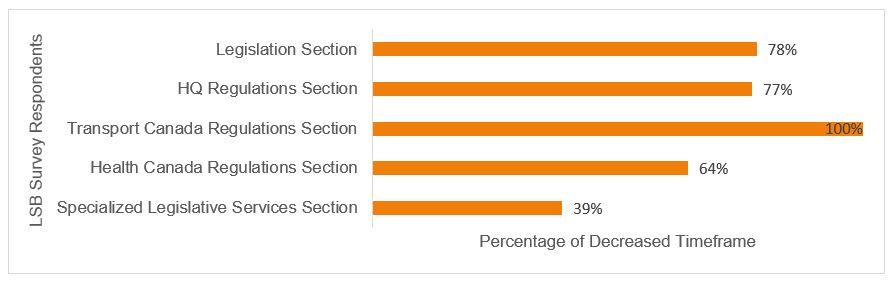
As illustrated in Figure 9, the vast majority of LSB survey respondents indicated that the timeframe allocated to complete the drafting process has decreased over the past five years. This view was also reflected to some extent in the results from the survey involving representatives from sponsoring departments and agencies, and from LSU legal counsel, where 40% and 38% respectively of respondents expressed a similar view (23% of respondents from the sponsoring departments and agencies and LSUs combined were not in a position to express an opinion).
As noted during interviews, these trends were significantly compounded by the requirements associated with the COVID-19 pandemic. Those involved in the implementation of the wide range of federal measures designed to respond to the pandemic had to produce the required advice, drafting and revision work within exceptionally short timeframes. This meant working after business hours, and during weekends, placing considerable stress on employees, professionally and personally. This also involved producing all that work in a radically shifting office environment, as work from home arrangements were being implemented to meet public health restrictions on in-person gatherings.
While the COVID-19 pandemic created extraordinary circumstances, the expectation that legislative work be produced within a shorter timeframe is a longstanding trend that predated the pandemic and is expected to continue in a post-pandemic environment. Back in 2013, the previous Evaluation of the Legislative Services Branch reported that “there was broad agreement across lines of evidence that timelines for drafting projects are decreasing”.Footnote 16 Findings from this evaluation indicate that the trend will not be any different moving forward.
(Source: LSB survey, 2022)
Text version
| LSB Survey Respondents | Percentage of Decreased Timeframe |
|---|---|
| Specialized Legislative Services Section | 39% |
| Health Canada Regulations Section | 64% |
| Transport Canada Regulations Section | 100% |
| HQ Regulations Section | 77% |
| Legislation Section | 78% |
4.2 Design and Delivery of ServicesFootnote 17
Findings from the evaluation indicate that the design and delivery structure for legislative services has successfully supported the overall implementation of the federal government’s legislative agenda. However, evaluation findings also point to issues around the sustainability of this design and delivery structure, particularly on the demands placed on LSB and the Finance LSU, which are further explored in the following sub-sections.
4.2.1 The Design and Delivery Structure has been Adapted but its Sustainability in the Long Term Poses a Risk
The design and delivery structure used by the LSB has proven to be adaptable to continue to meet requests for services. This happened in a shifting policy environment where legislative initiatives had to be drafted more expeditiously, triggering challenges for the provision of these services. There is an opportunity to explore a more sustainable design and service delivery structure that can be implemented in the long term to mitigate risks.
The Changing Nature of Demands for Legislative Services
The broader context in which legislative services are delivered has a significant impact on the ability of LSB and the Finance LSU to successfully deliver their mandate. This environment is shaped by factors such as the specific approach or organizational culture of the federal government to implement its policy or programming agenda, and by external dynamics or forces that shape the actions of the federal government. For legislative services, this requires, among other things, being capable of successfully operating in an environment that involves both proactive and reactive measures, along with the unpredictability that comes with the latter. The evaluation provided an opportunity to explore the extent to which the current design and delivery of legislative services delivery are aligned with the requirements associated with this larger setting.
Evaluation findings point to a certain degree of tension between the frequent desire on the part of the federal government to complete policy development and legislative drafting as soon as feasibly possible, and the commitment of the LSB to implement a thorough legislative drafting process that upholds high standards of quality and rigour. This tension has not arisen on every project involving the LSB, particularly not on the ones dealing with fairly contained measures responding to an operational need that is not time-sensitive. Through interviews and surveys, it has nonetheless been indicated to be a recurring concern.
The Impact of the Current Context
Representatives from sponsoring departments and agencies, and legal counsel from LSUs, have both emphasized during their interviews that the LSB and the Finance LSU responded very well to the challenging demands placed on them during the evaluation period, including at the peak of the pandemic-related work.
For their part, LSB representatives expressed concerns that the exceptional approach adopted during that period is further entrenching expectations that legislative drafting in general can be delivered within shorter timeframes and more open processes. On the latter point, LSB representatives identified the following trends as being particularly challenging:
- Working with partial instructions: Instead of proceeding with detailed instructions, the LSB must regularly work with very little or partial instructions that reflect evolving policy development, sometimes provided in only one language. Further, the instructions may continue to change and shift as the drafting proceeds. This leads to more tentative work that requires significant refinement as the process evolves.
- Producing multiple versions: In order to inform policy decisions, the LSB is sometimes required to prepare multiple versions of a draft bill or regulation, which may require additional analysis. This provides flexibility for the federal government to select the most relevant one in due time.
- Completing steps simultaneously: In order to meet specific timeframe requirements, the LSB may complete some steps of the drafting process simultaneously rather than sequentially. For instance, this may involve asking both the jurilinguists and the legistic revisors to complete their review at the same time and reconcile that work after, or having legal counsel do some of the revision work to accelerate the process. As the drafting steps may be repeated to adapt to the evolving policy changes, some of the revision work on revised drafts may be skipped to meet timeframe requirements.
- Less ability to consult: LSB members may not be in a position to consult colleagues within the Branch or in other sectors of Justice Canada when the work must be completed in a tight timeframe.
The role of Justice Canada, and LSB in particular, is to adequately support the legislative drafting process. At the time of the evaluation, it appears that the design and delivery structure was regularly challenged to adapt to some of the requirements and expectations placed on it. While evaluation findings indicate that the LSB successfully overcame these challenges, it remains a point of tension that, left unaddressed, will continue to raise issues of a systemic nature.
Current Design and Delivery Structure
The LSB has implemented a service delivery structure that has responded to the needs of those who directly engage with it. During interviews, representatives from sponsoring departments and agencies, and LSU legal counsel expressed a strong level of appreciation for the capacity of the LSB to deliver its services. Being “phenomenal”, capable of “meeting our expectations on all aspects”, being “very efficient, trusted and excellent collaborators” are some of the terms used to praise the capacity of the LSB to deliver its services. Some of the more specific comments provided during interviews with sponsoring departments and agencies, and LSU legal counsel, include the following:
- Early engagement: Sponsoring departments and agencies appreciate the ability to proceed with pre-drafting authority to initiate the legislative work in a timely manner. As for potential improvement on the engagement process, representatives from departments and agencies that do not undertake legislative work frequently noted that clearer directions could be provided on how to actually initially engage the LSB.
- Drafting process: The drafting process varies based on the nature and complexity of legislative projects. Representatives from sponsoring departments and agencies, and LSU legal counsel generally described their experience as collaborative and effective. One area for improvement that emerged from interviews would be to have a more consistent approach when it comes to marking or identifying modifications to a proposed legislative or regulatory text, so that the review of these changes by the instructing authority could be facilitated.
- Revision process: The revision process is undertaken internally within the LSB and, as a result, representatives from sponsoring department and agencies, and LSU legal counsel, had a fairly limited understanding of what it entailed. It was noted that additional information about where a legislative project stands in the revision process could prove useful, as well as proposed timelines for completing this task.
The Ability to Adapt to Change
The LSB has successfully modified some of its processes to adapt to the increasing volume of work and the shorter timeframes to deliver this work, including all legislative initiatives related to the COVID-19 pandemic, and to the shifting work environment that restricted access to offices. The following key changes were highlighted during interviews:
- Coordination meetings: To help manage the demands for legislative services, the LSB has a well-established practice of meeting regularly with the PCO (Legislation and House Planning) on legislative projects, with the Treasury Board Secretariat on regulatory projects, and with other stakeholders as applicable. Particularly during the pandemic, this was seen as a critical process to help forecast the demand and the range of support required based on both the volume and the complexity of the upcoming projects. One limitation of the current approach is that there are no meetings involving the PCO and the Treasury Board Secretariat to plan and coordinate the demands placed by both legislative and regulatory projects.
- Priority setting: During the evaluation period, the Headquarters Regulations Section implemented a prioritization tool that has proven effective. When a new file is opened, representatives from the sponsoring department or agency must complete a form that includes objective criteria to assess the priority level that should be assigned to the project. It allows both the sponsoring department or agency and the team assigned to the project to have a common understanding of the approach required in terms of timeframe.
- Working remotely: The requirement to work from home for an extended period during the pandemic has proven to be effective. It has somewhat mitigated the negative impact of having to work extra hours during evenings and weekends, particularly during the implementation of COVID-19 pandemic measures, as LSB members were at least in contact with their immediate families. It has also demonstrated the advantages of using virtual meeting technologies to work on shared documents and to involve individuals from various locations. While working on screens requires adjustments and is not the favourite option for all those involved, this is a model that many would like to retain, as opposed to resuming in-person drafting sessions, once the hybrid work model is fully implemented.
- Multi-team approach: In larger projects, the LSB has assigned multiple teams that can each draft a section of new legislation or regulations. This has allowed the projects to progress faster. However, this approach also raises some challenges in maintaining consistency and in coordinating the feedback and the review processes. This model, when selected, requires careful planning and implementation to avoid inefficiencies. A similar challenge related to project consistency was noted in the previous Evaluation of the Legislative Services Branch (2013), which recommended options be considered to minimize the re-assignment of legislative counsel from one project to another to ensure high-quality services and products are provided. To address this recommendation, the LSB reviewed and implemented improvements to project management tools, with training also provided to legislative counsel. In addition, LSB managers minimized the re-assignment of legislative counsel to ensure consistency, where possible. Therefore, consistency within projects remains an area where challenges may be experienced.
- Adapted revision process: On occasion, to accommodate time constraints, the required revisions to be done by legistic revisors or jurilinguists have been modified, by focusing the revision on specific sections of a draft text, or by engaging other colleagues (e.g., other legislative counsel) to undertake the review. The obvious drawback of this approach is that it does not ensure the highest standard of quality, but it has been used to accommodate exceptional circumstances.
These adaptations illustrate the ability of the LSB to incrementally adjust its service delivery approach to adjust to various circumstances. What has yet to be fully articulated, however, is the extent to which more comprehensive changes to the service delivery structures will be implemented to respond to the requirements placed on the LSB to deliver legislative products within a shorter timeframe. The ability to meet shorter timeframes, which has proven to be a longstanding trend, cannot rest on having LSB personnel work overtime when needed, or on having temporary and not fully fleshed-out adaptations to the drafting process, which have created uncertainties and frustrations among some LSB members, along with retention challenges. These issues pose risks to the sustainability of the services going forward.
The Model of Finance Canada
While the Finance LSU operates with a different drafting model, it also faces issues triggered by the need to operate within short timeframes, and having to respond to surges in the level of work, particularly around the tabling of federal budgets. During the period covered by the evaluation, the Finance LSU also had to deal with complex initiatives implemented in response to the COVID-19 pandemic. Keeping this context in mind, evaluation findings have not identified systemic difficulties with the drafting model in place, which provides a level of flexibility associated with a number of its components. For example, the work on drafting instructions is largely done internally; the drafting proceeds in one language before being translated; the legislative project team includes a combination of employees of the Department of Finance and the Finance LSU, and the revision process may be more contained if required.
The Integration of GBA Plus and Diversity and Inclusion Considerations in the Delivery of Services
Evaluation findings indicate that there has been some integration of GBA Plus and diversity and inclusion considerations in the service delivery structure of the LSB. For instance, all members of the LSB are expected to complete the online training on GBA Plus offered by the federal government. Also, for a number of years, the LSB has been using gender-neutral language in its drafting, and has established a working group to support these efforts.
More recently and as applicable, policy development process has also more readily engaged Indigenous organizations in accordance with the co-development vision reflected in the United Nations Declaration on the Rights of Indigenous Peoples, some legislation relating to Indigenous rights, and the inclusion of Indigenous languages (e.g., referring to an Indigenous community by using the name in the applicable Indigenous language).
During interviews, representatives from the LSB, the sponsoring departments and agencies, and the LSUs have emphasized that the integration of GBA Plus considerations in the actual content of new or amending legislation and regulations is essentially done in the earlier stage of the policy development process, rather than the actual drafting of the bill or regulations.
Delivery of Special Programs
As part of its mandate, the LSB is involved in activities related to the Miscellaneous Statute Law Amendment Program, the Statutes Repeal Act, and the harmonization of federal law with the civil law of Quebec and the common law of other provinces and territories. To support these efforts, the LSB has implemented a number of processes, which are led by the SLSS:
- For the Statutes Repeal Act, an annual process addresses the requirement of that Act to repeal certain laws and regulations that have not come into force within a defined period. During interviews, those involved in this process reported that it was proceeding efficiently.
- For the Miscellaneous Statute Act Amendment Program, whose purpose is to correct anomalies, inconsistencies, outdated terminology or errors in federal statutes, the process is undertaken every three to five years. Interview findings indicate that the main challenge with this process relates to the need to successfully engage a multitude of departments and agencies in preparing the Memorandum to Cabinet required to implement these corrections. Other priorities among these departments and agencies have tended to limit the ability to proceed with these changes.
- Finally, the harmonization of federal law with the civil law of Quebec and the common law of other provinces and territories requires the engagement of a multitude of departments and agencies. To date, three Federal Law-Civil Law Harmonisation Acts have come into force in 2001, 2004 and 2011. A fourth act (Bill S-11) has been tabled in October 2022 and is still proceeding through the parliamentary process.
4.2.2 Division of Roles and Responsibilities is Generally Clear
The division of roles and responsibilities among the sections of the LSB and with other stakeholders is clearly established, but suggestions for further improvements have been identified.
The Division within the LSB
The successful achievement of the LSB’s mandate requires all teams within the Branch to work in a complementary fashion, each providing essential support to the drafting of legislation and regulations that meet the needs of the federal government.
In the complex and fluid environment in which the LSB operates, having a clear division of roles and responsibilities is critical. Evaluation findings indicate that LSB members are generally satisfied with the current framework. This is the view that was expressed by 79% of LSB survey respondents. During interviews, LSB members emphasized the collegial environment within the LSB where communications are open, including addressing issues related to the division of roles and responsibilities. A best practice that emerged from the findings is to have sufficient coordinators and team leaders, who are typically senior counsel who can provide guidance and mentoring to oversee the daily activities and operational requirements of each group within the LSB, particularly in light of the shifting demands that may require a reallocation of priorities and associated resources.
The Division between the LSB and Other Stakeholders
Evaluation findings also reported high levels of satisfaction when it comes to the distribution of roles and responsibilities between the LSB and the other stakeholders. Survey findings indicate that all respondents from sponsoring departments and agencies, and 95% of respondents from LSUs were satisfied with the division of roles and responsibilities between themselves and the LSB. As for the survey respondents from the LSB, 79% were also satisfied, with consistent results among respondents from the various groups within the LSB.
When asked about potential improvements to the distribution of roles and responsibilities between the LSB and other stakeholders, the following insights emerged from the interviews. Addressing these issues would further enhance the efficiency of service delivery.
- Consultations within Justice Canada: It would be helpful to clarify who should lead consultations with other sectors within Justice Canada, in cases where consultations are needed. At this point, LSB representatives may lead them, while in other cases legal counsel from LSUs lead them. Clearer guidelines would enhance the efficiency of this process.
- The work of the Constitutional, Administrative, and International Law Section (CAILS): Particularly as it relates to clarifying and confirming the enabling authority for proposed regulations, sponsoring departments or agencies, through their LSU, may seek legal advice from advisory services within the SLSS of LSB, or from the CAILS. It would be helpful to have clearer guidelines on when to engage either or both of these two groups.
- Incorporation by reference: At the time of this report, various approaches were used to review documentation incorporated by reference. For instance, the Transport Canada Regulations Section reviews such documents. In other cases, it is up to the LSU associated to the sponsoring department or agency to review this documentation. During interviews, suggestions were made to review the current strategy, and ensure that the most efficient approach is retained.
A similar recommendation to clarify the role between LSB and respective clients and key partners to ensure the quality and completeness of requests was included within the previous Evaluation of Legislative Services Branch (2013). The LSB addressed this recommendation by undertaking steps to provide training sessions in a number of key areas such as the preparation of drafting instructions, information regarding the legislative and regulatory process, exemptions from the Statutory Instruments Act and incorporation by reference. Training materials were also made available on the Justice website. Although actions were previously taken to address the issue related to clarity of roles, evaluation findings note that it remains an ongoing challenge.
4.2.3 Internal Processes are Working Well, but Some Improvement is Needed
The processes in place within the LSB are working well, but there is a need to update foundational documents and to enhance the process to open and allocate files.
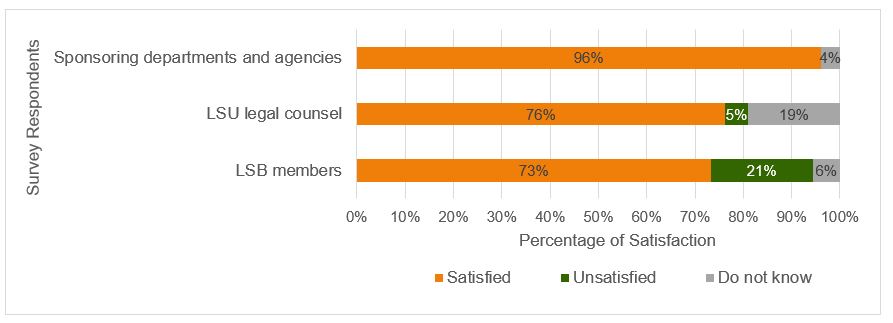
The work within the LSB and with other stakeholders in the drafting process is guided by a number of processes. Overall, and as illustrated in Figure 10, evaluation findings point to a high level of satisfaction with the current processes. In particular, 96% of survey respondents from sponsoring departments and agencies indicated that they were satisfied with these processes. Among survey respondents from LSUs, the level of satisfaction stood at 76% (with an additional 19% who could not provide an opinion).
While survey respondents from the LSB were generally satisfied with the current processes in place (73%), 21% reported that they were not satisfied. During interviews, representatives from the LSB made suggestions on how to improve the current processes:
- Maintaining updated manuals: The LSB produces a series of guidelines and practice manuals (such as deskbooks, guides and handbooks). While these are important tools, evaluation findings suggest that the LSB have had limited capacity to regularly update them. Portions of these documents are updated when feasible, but a more systematic approach is needed to ensure that the full range of guidelines and manuals are kept updated.
- A more consistent approach to opening files: At the time of the evaluation, the various groups within the LSB were using different processes to open new files. To help with the monitoring of these files, it was suggested that a more consistent approach be used. In particular, it was noted that the current file opening form used in the Headquarters and Health Canada Regulations Sections was helping to streamline the process for both the LSB and the representatives from the sponsoring department or agency who must provide the relevant information.
- Clarifying the process to assign files: Another suggestion was to confirm and communicate more clearly the process used internally within the LSB to assign files, to ensure that availability, expertise and subject-matter interests may be considered when feasible.
(Source: LSB and client surveys, 2022)
Text version
| Survey Respondents | Percentage of Satisfied | Percentage of Unsatisfied | Percentage of Do not know |
| LSB members | 73% | 21% | 6% |
| LSU legal counsel | 76% | 5% | 19% |
| Sponsoring departments and agencies | 96% | 0% | 4% |
4.2.4 Human Resources Levels Raise Challenges
During the evaluation period, the level of human resources allocated to the LSB has increased, but there is a need to further enhance the capacity of the LSB in order to meet the demand for its services.
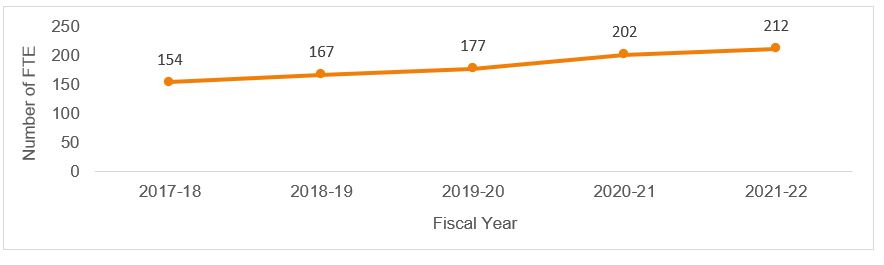
As summarized in Figure 11, the number of FTEs assigned to the LSB increased by 38% during the evaluation period, and these additional resources have been distributed across all the occupational groups (see Figure 3 on page 10 for more details).
(Source: LEX)
Text version
| Fiscal Year | Number of FTE |
|---|---|
| 2017-18 | 154 |
| 2018-19 | 167 |
| 2019-20 | 177 |
| 2020-21 | 202 |
| 2021-22 | 212 |
Despite having a larger team in place, the LSB experienced challenges at times to meet the demands for services. For instance, 62% of survey respondents from the LSB were of the opinion that there was an inadequate balance between the level of resources required to deliver services and the demand for these services. This sentiment was also expressed during interviews with LSB members, as well as with representatives from sponsoring departments and agencies, and LSU legal counsel. The current teams within the LSB are stretched, and concerns were expressed on the risks of overextending individuals (including risks of burnout), which can affect the ability of the LSB to recruit and retain its personnel.
LSB management recognized that employees required support during the evaluation period and undertook efforts to ensure workplace wellness and mental health. For instance, the PLLSS Wellness and Mental Health Committee, which was established in 2021, implemented several initiatives, such as the development and distribution of best practices to improve team morale; having management receive mental health training to better support employees; and promoting activities provided by the Mental Health Sector Committee (e.g., participation in listening circles, distribution of a monthly newsletter regarding training, tips and resources to improve well-being, etc.).
During interviews, representatives from the LSB indicated that new staff members are required in all sections of the LSB. They also noted that having more paralegals could relieve some of the pressures currently placed on legal counsel. For instance, paralegals are already used in Regulations Sections to help draft some of the proposed regulations. They are also used by advisory services to undertake some legal research.
Acting in a timely manner to add new personnel to the LSB is seen as particularly important, as any new member of the LSB requires extensive on-the-job training before they become fully operational. In the case of jurilinguists and legistic revisors, since there are no college or university degrees that directly prepare someone for such specialized positions, the specialized training is essentially done on-the-job. Interview findings suggest that, at the time of the evaluation, Justice Canada was already exploring options to add new personnel to the LSB, which would address the concerns described in this sub-section.
Enhancing the human resource capacity of the LSB would complement any adaptation to LSB’s service delivery model to better respond to the ongoing pressure to complete legislative drafting within a shorter timeframe, as discussed in sub-section 4.2.1.
4.3 Effectiveness
4.3.1 High Levels of Satisfaction with the Services Received
Sponsoring departments and agencies, and LSUs, report high levels of satisfaction with the work provided by the LSB and the Finance LSU. LSB representatives were somewhat less satisfied with the quality of the work they produce.
The Perspective of Sponsoring Departments and Agencies, and LSUs
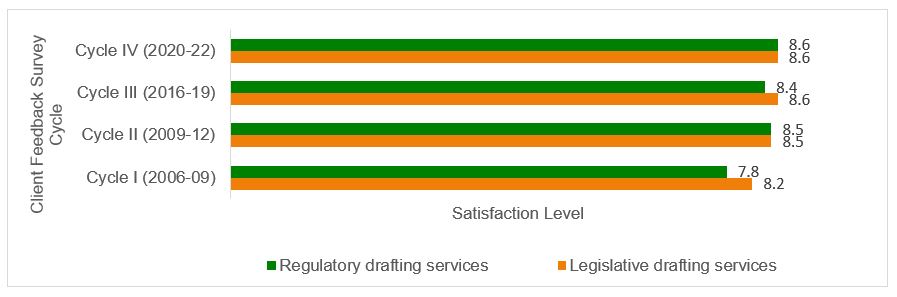
The LSB and Finance LSU have a long history of providing quality legislative and regulatory drafting services. As illustrated in Figure 12, the results from the cyclical client feedback surveys that Justice administers point to high rankings since 2006. Except for one case in the first cycle (2006 to 2009), these results have systematically exceeded the departmental target of 8.0 out of 10.
(Source: Justice Canada Legal Services Client Feedback Survey, 2022)
Text version
| Client Feedback Survey Cycle | Satisfaction Level for Legislative drafting services | Satisfaction Level for Regulatory drafting services |
|---|---|---|
| Cycle I (2006-09) | 8.2 | 7.8 |
| Cycle II (2009-12) | 8.5 | 8.5 |
| Cycle III (2016-19) | 8.6 | 8.4 |
| Cycle IV (2020-22) | 8.6 | 8.6 |
These cyclical client feedback surveys cover the usefulness of the services provided, their timeliness, the quality of legal risk management, and the accessibility and responsiveness of those providing these services. On all these dimensions, both the legislative and regulatory services scored above 8.0 during the last cycle.
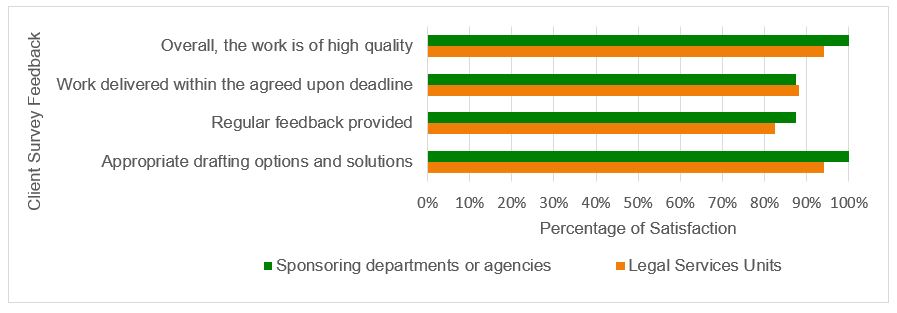
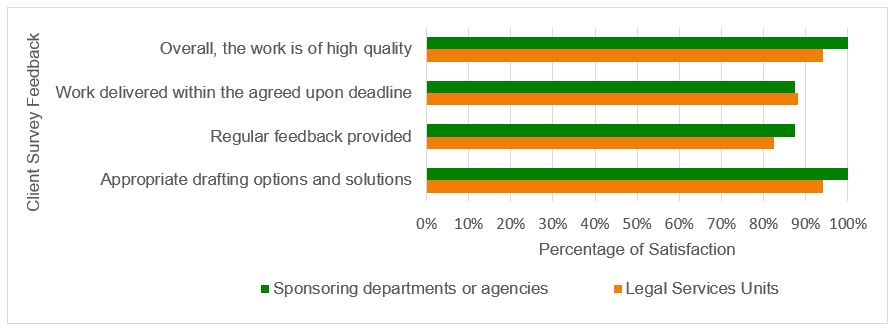
The complementary data collected through surveys conducted as part of this evaluation directly echoed these trends. As illustrated in Figures 13 and 14, both representatives from sponsoring departments and agencies, and LSU legal counsel, reported high levels of satisfaction with the services provided by the LSB. Of note, when asked about the overall quality of the work provided on both legislative and regulatory projects, all respondents from sponsoring departments and agencies reported that they were satisfied. For all dimensions covered by the survey, results always exceed 80% in satisfaction levels, which mirrors the target set by Justice. As for the services provided by the SLSS, only a few survey respondents were in a position to provide any feedback, but those who did consistently report a high level of satisfaction with the quality of the services provided.
(Source: Client Survey, 2022)
Text version
| Client Survey Feedback | Percentage of Satisfaction from Legal Services Units | Percentage of Satisfaction from Sponsoring departments or agencies |
|---|---|---|
| Appropriate drafting options and solutions | 94% | 100% |
| Regular feedback provided | 82% | 88% |
| Work delivered within the agreed upon deadline | 88% | 88% |
| Overall, the work is of high quality | 94% | 100% |
(Source: Client Survey, 2022)
Text version
| Client Survey Feedback | Percentage of Satisfaction from Legal Services Units | Percentage of Satisfaction from Sponsoring departments or agencies |
|---|---|---|
| Appropriate drafting options and solutions | 94% | 100% |
| Regular feedback provided | 82% | 88% |
| Work delivered within the agreed upon deadline | 88% | 88% |
| Overall, the work is of high quality | 94% | 100% |
During interviews, representatives from the sponsoring departments and agencies, and from LSUs, emphasized that the LSB often goes “above and beyond” to deliver a good product. There was also an acknowledgement that, when timeframes are too tight, the LSB cannot be expected to achieve the same results in terms of quality. As such, they noted that the LSB is systematically delivering the best that can be expected within the constraints they are given.
As it relates more specifically to the support provided by the Finance LSU, interview findings from representatives from the Department of Finance also reported a high level of satisfaction. The experience of the Finance LSU in the parliamentary process, and on the requirements associated with legislative and regulatory drafting, plays a highly complementary role to the subject-matter expertise that Finance internal drafters bring to the task.
The Perspective of LSB Representatives
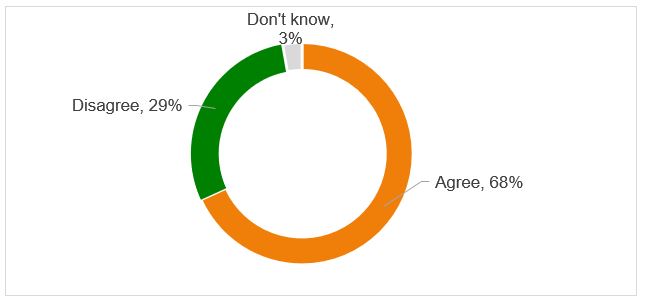
When asked whether they were generally in a position to deliver work that they consider to be of high- quality, LSB survey recipients provided a perspective that was not as favourable as the one provided by those who actually receive the work they produce. As illustrated in Figure 15, 29% of survey respondents disagreed with that statement.
(Source: LSB Survey, 2022)
Text version
| LSB Survey Respondent Perspective | Percentage |
|---|---|
| Agree | 68% |
| Disagree | 29% |
| Don't know | 3% |
In both survey and interview findings, LSB members provided further insights on those challenges perceived to have had an impact on the quality of their work. It is predominantly the combination of tight deadlines and limited resources that have, at times, limited the ability of LSB members to complete a process that is as thorough as what they would have liked. They also noted that the option of proceeding with partial instructions, while providing flexibility for sponsoring departments and agencies, leads to a more tentative and incremental approach to drafting that can limit the ability of the LSB to optimize both the resources allocated to the project and the quality of the work delivered.
4.3.2 Adequate Support and Training
Members of the LSB are provided with helpful support and they have access to training opportunities. They also provide training on the legislative process, which is highly valued.
Support and Training Offered to the LSB and Finance LSU
Through formal and informal training, members of the LSB generally perceive the support they receive as being adequate. For instance, 82% of LSB survey respondents indicated that they have access to the training they require, and 74% noted that the training opportunities available to them were appropriate and relevant to their work. What is particularly valued is the direct support provided through mentorship or practice groups. During interviews, Finance LSU representatives also emphasized that they offer ongoing training to any new member of the team.
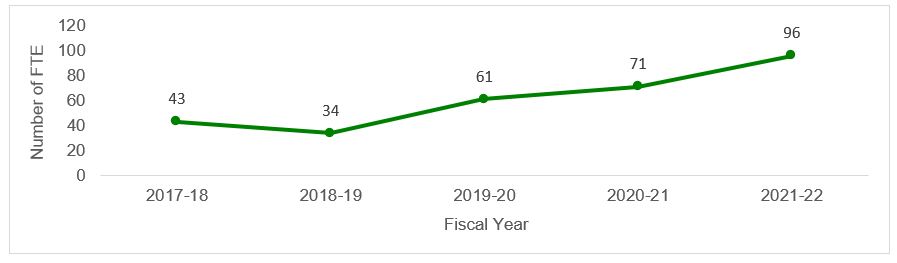
The administrative data confirms that the relative level of training provided to LSB members has increased over the evaluation period. As indicated in Figure 16, it went from 43 hours of training received per FTE in 2017-18 to 96 hours in 2021-22.
(Source: LEX)
Text version
| Fiscal Year | Number of Recorded Hours |
| 2017-18 | 43 |
| 2018-19 | 34 |
| 2019-20 | 61 |
| 2020-21 | 71 |
| 2021-22 | 96 |
In terms of potential improvement to the support currently provided, the following suggestions emerged from both the survey and interview findings:
- Ensuring that the workload of team members can accommodate the participation in relevant training opportunities, as well as the provision of training to other stakeholders.
- Enhance the administrative support currently provided to practice groups to facilitate their learning activities;
- Further promote mentoring opportunities;
- Enhance the use of online training when appropriate, including in-house recordings that can be used to provide the foundational training required by new members.
As previously noted in subsection 4.2.3, the guides and manuals currently available to LSB members could also be improved, by being more effectively centralized and systematically updated.
Training Offered by the LSB
Representatives from the LSB offer training on legislative drafting to representatives from sponsoring departments and agencies, and to LSU members. The administrative data indicates that the number of hours of training delivered by the LSB has steadily increased during the period covered by the evaluation, from 3,554 hours in 2017-18 to 3,901 hours in 2021-21.Footnote 18
Survey and interview findings converge in emphasizing the relevance and quality of that training. Those who had an opportunity to attend the training described it as clear and concise, and well tailored to the needs of participants. The topics that were seen as the most useful are the training on developing drafting instructions, and the overview of the legislative drafting processes. As it relates more specifically to the needs of LSU legal counsel, some of the topics mentioned include training on how to use specific forms to submit requests, or on the incorporation by reference process.
The suggestions to enhance the training currently offered by the LSB are to first raise the awareness about these offerings, and to ensure that LSB members are available to provide that training.
4.3.3 Accessible Federal Laws
Efforts have been made to enhance the accessibility of the language used in drafting legislation or regulations. Also, the Justice Laws Website provides efficient access to the consolidated versions of all federal laws and regulations.
For the purpose of this evaluation, the concept of accessibility when it comes to federal laws is addressed from two perspectives: the clarity of the drafting itself, and the extent to which the federal laws are easily accessible to any stakeholder.
Accessibility of the Language Used
By their very nature, laws and regulations tend to be highly technical, and typically require formal legal training to be fully understood. Within this framework, evaluation findings confirm that the LSB has been pursuing efforts to simplify and enhance the clarity of the language used during the drafting process, by incorporating more lay terms. Efforts are also underway to better reflect Indigenous values and realities, as applicable. The goal is to maximize accessibility, while simultaneously maintaining precision.
Another important achievement in clarity comes from the current approach within the LSB to have both French and English versions of proposed bills and regulations drafted simultaneously, with bijuralism considerations in mind to reflect Canada’s two legal traditions.
The Justice Laws Website
The Justice Laws Website provides access to the consolidated versions of all federal laws and regulations, and it experiences high volumes of traffic. As illustrated in Figure 17 and using the FY 2021-22 as an example, close to 10 million users completed approximately 18 million visits to the website, including both the English and French versions of its content.
(Source: Justice Laws Website via Communications Branch)
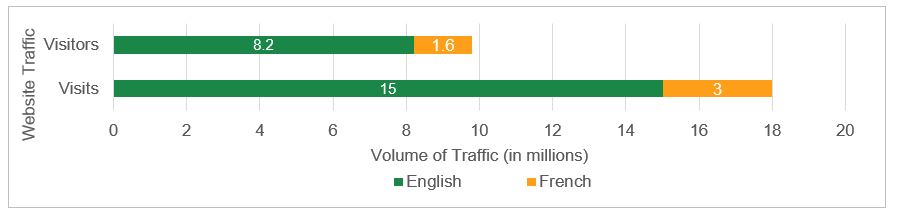
Text version
| Website Traffic | Volume of Traffic for English Content (in Millions) | Volume of Traffic for French Content (in millions) |
|---|---|---|
| Visits | 15 | 3 |
| Visitors | 8.2 | 1.6 |
The list of the Acts that were consulted the most during the evaluation period includes the following:
- Criminal Code;
- Income Tax Act;
- Immigration and Refugee Protection Regulations;
- Access to Information Act;
- Canada Labour Code;
- Immigration and Refugee Protection Act;
- Constitutional Laws from 1867 to 1982;
- Canadian Aviation Regulations; and,
- Food and Drug Regulations.
Through both surveys and interviews, representatives from sponsoring departments and agencies, LSU, and the LSB all praised the website, which represents a significant achievement in consolidation. When it comes to accessing the current federal legislation and regulations, the website is perceived as reliable, user-friendly, and efficient.
The proposed improvement to the website essentially came from those who use it extensively, including advanced searches related to the current and historical versions of federal laws and regulations. The following key suggestions for improvement were made:
- Enhance the search function for more advanced searches, to a level comparable to what other tools such as CanLII or Quicklaw offer;
- Provide access to the historical versions of legislative texts prior to 2001;
- Restore the toggle function between the English and French versions;
- Make the site more accessible on mobile phones; and,
- Include definitions of key terms available by placing the cursor over them.
4.3.4 Partnerships are in Place
The LSB and the Finance LSU have established strong partnerships with sponsoring departments and agencies, and LSUs. The goal is to ensure that this achievement will remain sustainable in the long term.
As documented throughout this report, the work and contribution of the LSB and of the Finance LSU are highly valued. When asked how they were rating their overall partnership with the LSB, 98% of survey respondents from sponsoring departments and agencies, and from LSU, indicated that it was good or excellent.
The same sentiment was expressed throughout the interviews with sponsoring departments and agencies, and LSUs. The partnership was described as strong, collaborative, efficient, responsive, accommodating, and driven by a strong commitment to the projects in which the LSB or the Finance LSU is engaged. It was also noted that the approaches of the LSB and the Finance LSU are client-centric, and focus on solutions that can enable the federal government to proceed with its legislative initiatives.
LSB representatives are also pleased with the partnerships they have established as part of these projects. There were, however, concerns expressed around the sustainability of the current approach. In other words, results have been achieved, but this has regularly been done at the cost of dealing with challenging deadlines, and the need for extended overtime, which was not always conducive to the quality of products that was hoped for. By extension, this has also had a human cost for a team that has become stretched and apprehensive about the outlook for the future. Should such an approach become the “new normal”, evaluation findings suggest that it could have an impact on the retention of some employees. In considering this, however, the COVID-19 pandemic remains a critical and somewhat unknown variable. At the time of the evaluation, it was still difficult to assess fully the extent to which the peaks in demands that resulted from this public-health crisis have receded, and what legislative drafting post-pandemic will require.
4.4 Efficiency
The service delivery model used by the LSB prevents systemic duplications of services. The main challenge in relation to efficiency comes from the need to have sufficient resources to deliver the required services.
Duplication of Efforts
In assessing the overall efficiency of legislative services, this evaluation considered the issue of potential duplication in the work performed. In this regard, evaluation findings indicate that the current service delivery structure is preventing instances of systemic duplications. The roles and responsibilities are clearly assigned, each group within the LSB has a well-defined mandate and role to play, and the communications within the LSB are such that issues are typically discussed and addressed as they occur.
However, as noted during interviews, the approach adopted in relation to a specific legislative project may trigger some duplication or waste of resources. This occurs outside of the control of the LSB in cases when policy directions are partial or shifting, or in which multiple avenues are being considered simultaneously. In such a context, certain tasks around drafting or revision may proceed through several rounds before the final direction is settled. This, however, relates more to the nature of the projects undertaken than the overall design and delivery structure of legislative services. Also, the evaluation did not identify this to be recurrent to a point that would trigger a systemic issue.
Level of Resources Available
The other key issue in relation to efficiency that this evaluation considered is the extent to which results were achieved using an adequate level of resources. As already noted, despite the increase in resources that it experienced over the evaluation question, the demands placed on the LSB triggered the need for regular and, at times, extended overtime to deliver the legislative support required. This approach is likely unsustainable over time, and does not reflect the commitment of Justice to provide a working environment that supports a healthy work-life balance. At the time of the evaluation, the Department had undertaken a process to add new resources to specifically address that issue.
Beyond the issue of human resource levels, evaluation findings indicate that close collaborations among all stakeholders will continue to play a critical role in ensuring that legislative drafting can be done within the prescribed timeframe requirements determined by the federal government, while also maintaining a high level of quality work that has been achieved over time.
- Date modified: