
3. Figures 1 and 2: Schematics of Conduct Review Process – Current and Proposed
Figure 1: Schematic of Current Conduct Review Process

Figure 1: Schematic of Current Conduct Review Process – Text version
This is a schematic flow chart depicting the current conduct review process. It is composed of boxes linked by arrows, with each box representing a step of the process through which a complaint against a judge must pass. Each box also contains identifying information about the decision-maker responsible for that step of the process.
The first box is titled, “Screening”, a step undertaken by the CJC’s Executive Director. An arrow flows from this box to a second box titled, “Initial Review”, a step undertaken by a CJC member. An arrow flows from this box to a third box titled, “Review Panel”, a body composed of three CJC members, one puisne judge, and one layperson. An arrow flows from the “Review Panel” box to a fourth box titled, “Inquiry Committee”, a body composed of three or five members, with the majority being CJC members and the minority being lawyers designated by the Minister of Justice. An arrow flows from this box to a fifth box titled, “Council of the Whole”, a body consisting of a minimum of 17 CJC members. The next arrow flows from the “Council of the Whole” box to a box titled, “Minister of Justice”. The last arrow flows from there to the final box, which is titled, “Parliament”.
Figure 2: Schematic of Proposed Conduct Review Process
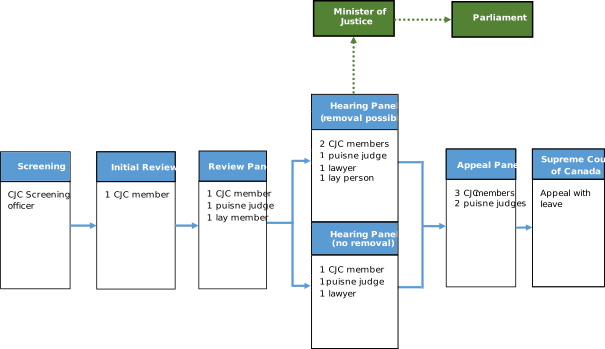
Figure 2: Schematic of Proposed Conduct Review Process – Text version
This is a schematic flow chart depicting the conduct review process proposed by Bill C-9. It is composed of boxes linked by arrows, with each box representing a step of the process through which a complaint against a judge must pass. Each box also contains identifying information about the decision-maker responsible for that step of the process.
The first box is titled, “Screening”, a step undertaken by a CJC screening officer. An arrow flows from this box to a second box titled, “Initial Review”, a step undertaken by a CJC member. An arrow flows from this box to a third box titled, “Review Panel”, a body composed of one CJC member, one puisne judge, and one lay member. Two arrows exit this box. The first arrow leads to a box titled, “Hearing Panel (removal possible)” and the second arrow leads to the box titled, “Hearing Panel (no removal)”. A “Hearing Panel (no removal)” is composed of one CJC member, one puisne judge, and one lawyer. A “Hearing Panel (removal possible)” has the same membership as the “Hearing Panel (no removal)”, but also includes one additional CJC member and one lay person.
Two arrows exit the “Hearing Panel (removal possible)” box. The first connects to a box titled, “Minister of Justice”, which then connects to a box titled, “Parliament”. The second arrow exiting the box for Hearing Panel (removal possible) meets up with an arrow exiting the box for Hearing Panel (no removal), and they both connect to a box titled, “Appeal Panel”, a body composed of three CJC members and two puisne judges. Finally, an arrow connects the “Appeal Panel” box to a box titled, “Supreme Court of Canada”, which indicates that this step requires leave of the Court.
- Date modified: