
Section 6 – Action Plan implementation
As summarized in the graph below, the Government of Canada continues to advance implementation of the Action Plan. Year-over-year, more APMs are now completed or in ongoing implementation (meaning that the measure is fully developed but is ongoing or evergreen in nature). At the same time, there has been an increase in the number of APMs that have been put “on hold” or paused. In some cases, changes in government priorities have required adjustments to how the measure is being advanced; in others, limited partner capacity due to insufficient funding or other reasons has led to the APM being paused.
Since the release of the Action Plan in 2023, departments have completed eight (8) measures and forty-five (45) are fully implemented ongoing measures. Of the eight (8) APMs reporting being completed, five (5) were completed in fiscal year 2024–25 and an additional three (3) were completed this past fiscal year.
Status of Action Plan measures based on data received for the 2024, 2025, and 2026 Annual Progress Reports
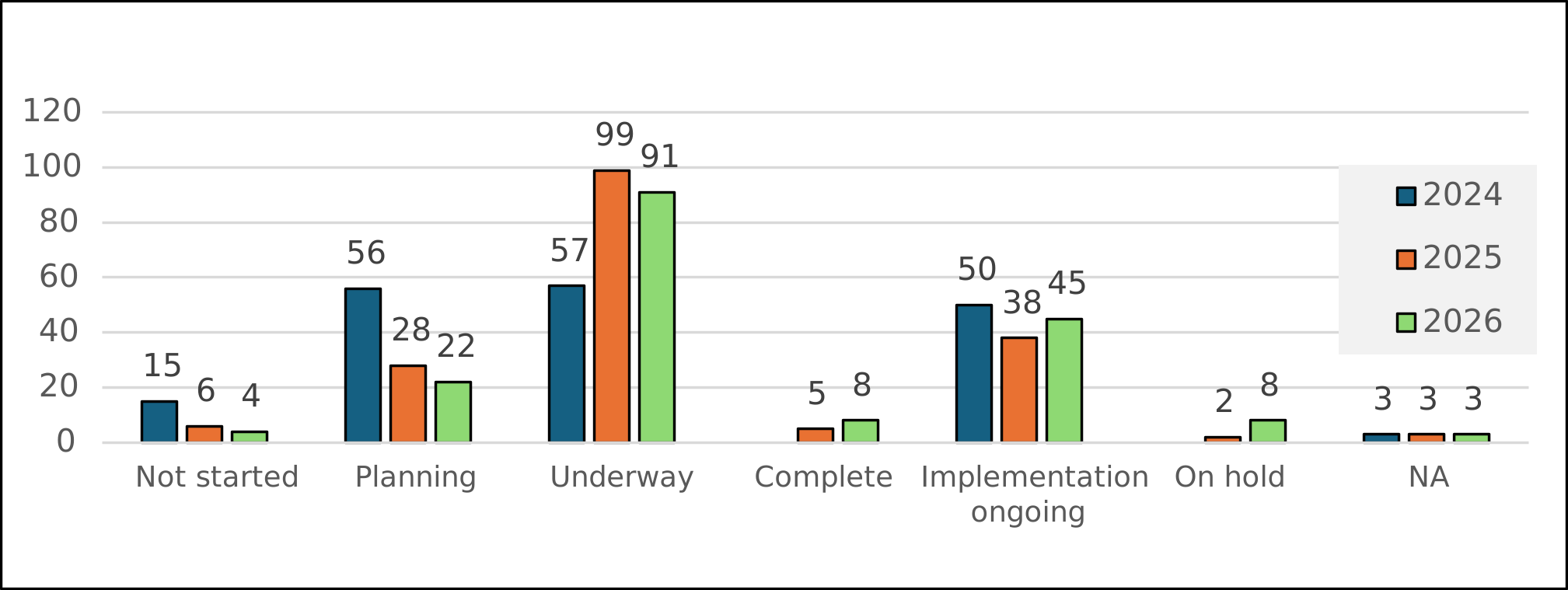
Status of Action Plan measures based on data received for the 2024, 2025, and 2026 Annual Progress Reports – Text version
- Not started:
- 2024: 15
- 2025: 6
- 2026: 4
- Planning:
- 2024: 56
- 2025: 28
- 2026: 22
- Underway:
- 2024: 57
- 2025: 99
- 2026: 91
- Complete:
- 2024: 0
- 2025: 5
- 2026: 8
- Implementation ongoing:
- 2024: 50
- 2025: 38
- 2026: 45
- On hold:
- 2024: 0
- 2025: 2
- 2026: 8
- No applicable (NA):
- 2024: 3
- 2025: 3
- 2026: 3
Completed in 2025–26
- SP15 – RCMP Intercultural Learning Strategy – RCMP
- SP82 – Palliative and end-of-life care framework – Health Canada
- SP83 – Indigenous knowledge and medical assistance in dying – Health Canada
The Royal Canadian Mounted Police (RCMP) consulted internally and externally to develop an Intercultural Learning Strategy. With funding sunsetting in fiscal year 2025–26, the RCMP’s National Learning Services shifted focus from further consultations to implementing a targeted action plan using existing feedback. The implementation of the action plan items now forms part of regular, ongoing business operations and thus SP15 can now be considered completed.
Health Canada, in collaboration with Indigenous Services Canada (ISC), has engaged with a wide variety of Indigenous governments and representative organizations on the topic of palliative care and medical assistance in dying. Outcomes were highlighted through a What We Heard Report that was published in December 2025, which shares major themes and issues from the department’s engagement with Indigenous peoples on end-of-life care including medical assistance in dying.
Departments and agencies have shared highlights from this past year of implementation under the chapter headings below. Additional updates are in Annex B: Status of Action Plan Measures.
Shared priorities
Measures that address all Indigenous peoples are in the Shared Priorities (SP) chapter. There are approximately 30 departments leading 111 measures.
Implementation of this chapter is a significant and evolving undertaking. It involves complex work across departments and remains a work in progress. Indigenous partners identified several key priorities, including stronger integration of Indigenous laws (SP28), a more robust approach to free, prior and informed consent (FPIC) (SP32), and the inclusion of clear governance outcome indicators and joint performance measurement mechanisms (SP20). They emphasized that these priorities are key pathways to strengthening accountability and advancing the meaningful realization of rights – including for those who often face compounded barriers, including women, 2SLGBTQI+ people, Elders, youth, and persons with disabilities.
Addressing injustices, prejudice, violence, systemic racism and discrimination
Improving access to culturally-safe health services
In advancing SP7, in 2025–26, the Addressing Anti-Indigenous Racism in Canada’s Health Systems initiative supported the continuation of Indigenous-led initiatives to improve health equity and accessibility for Indigenous peoples, including the hiring and retention of Indigenous patient advocates, health system navigators, midwives, and birth support workers in positions to provide immediate support to Indigenous patients. The initiative has also continued to fund a first of its kind First Nations Health Ombudsperson Office in Saskatchewan, supporting accountability and redress for discrimination in health services. Two-Spirited People of Manitoba Inc. was also provided with funding to deliver information sessions to 2SLGBTQI+ people living in northern Manitoba communities on the topic of informed consent and rights when receiving health care.
The Indigenous Health Equity Fund is providing $2 billion over ten years to support First Nation, Inuit, and Métis communities and organizations address gaps in access to quality and culturally safe health services. For example, the Indigenous Health Equity Fund has supported organizations to develop longer-term approaches to culturally safe health services, including funding for the development of an Indigenous Midwifery Bachelor’s Program through the First Nations Technical Institute. The Fund has also provided funding to the Health Standards Organization to support the development of a National Standard for Cultural Safety and Humility.
In relation to SP8, the Indigenous Health Equity Fund has supported discussions between First Nation, Inuit and Métis communities and their respective provincial and territorial governments to increase access to health services. For instance, Eskasoni First Nation is planning to partner with the Government of Nova Scotia to expand their Health Centre to increase access to mental wellness services, including a mental health nurse, substance use wraparound supports, harm reduction and crisis response. Samson Cree Nation is planning to engage with Alberta’s Primary Health Networks to establish collaborative partnerships and explore cost-sharing opportunities aimed at improving access to comprehensive health services for Samson Cree Nation members, including access to specialized health services such as chronic disease management, mental health supports, and preventive care.
Related to SP81, the Government of Canada renewed $630 million of funding over two years to support the availability, accessibility, quality, and effectiveness of mental wellness services for Indigenous Peoples across the country. This investment contributes to providing Indigenous peoples with equitable access to compassionate, trauma-informed, and culturally-based mental health resources and care in communities across Canada. This investment includes the renewal of the Trauma Informed Health and Cultural Support program, which provides culturally relevant mental health counselling and emotional and cultural supports to individuals, families, and communities healing from Indian Residential Schools, Indian Day Schools, the ongoing crisis of Missing and Murdered Indigenous Women, Girls, and 2SLGBTQI+ people, related settlement processes, and other colonial harms.
Promoting mutual respect and understanding
UN Declaration education for public servants
Justice Canada continues to work on foundational training for public servants including the development a 3-part Self-Paced Introductory Course series on the UN Declaration Act. The first course is being developed now and will focus on the history and development of the UN Declaration and the contributions of Indigenous peoples. This year, the department prepared a What We Heard Report summarizing input gathered during the initial phase of consultation and cooperation with Indigenous partners. The purpose of the report is to inform the government on recommended improvements to existing training on the UN Declaration and the UN Declaration Act; to identify priorities and opportunities for co-creation of training on various topics related to Indigenous peoples; and to share, in a transparent way, what was heard through the process.
Current training being offered by Justice Canada’s Indigenous Rights Centre examines the UN Declaration Act’s key statutory requirements in greater depth. Participants develop practical skills to apply legal and analytical frameworks to support implementation of the Act, including using the UN Declaration as an interpretive aid to Canadian law, assessing legislative and regulatory consistency with the UN Declaration, advising on consultation and cooperation obligations under section 5, understanding the role of Legal Services Unit counsel, and supporting the development and implementation of the Action Plan under section 6.
At the same time, the Canada School of Public Service (CSPS) continues to refresh and expand its UN Declaration Learning Portal as new materials become available. In 2025–26, CSPS delivered 11 learning events that reached more than 10,000 public servants. Several new learning products were released including a video and micro-course on microaggressions toward Indigenous peoples; an updated and redesigned version of the mobile app Reconciliation: A Starting Point; and a new job aid, Learning Quest on Indigenous Cultures (developed with Parks Canada). Together, these resources support federal employees in building the awareness, skills, and commitment necessary to uphold Indigenous rights and advance reconciliation across the public service.
Ensuring oversight and accountability
This year, the Action Plan Advisory Committee (APAC) (SP22), an Indigenous-led, advisory body made up of 10 experts from diverse First Nations, Inuit, and Métis backgrounds and experiences, was established. APAC held meetings to develop advice and guidance to the Minister of Justice on the implementation of the Shared priorities chapter of the Action Plan. Partners have generally welcomed the establishment of an advisory body such as APAC. The work of APAC – as specified in their terms of reference – does not replace consultation and cooperation with Indigenous partners.
Action Plan review and update
SP21 commits the government to co-develop and implement a process to review and update the Action Plan every five years and to establish a process for making amendments. Justice Canada has begun initial planning to identify options, informed by preliminary discussions with Indigenous partners, for how to carry out this work.
As reflected throughout this and previous annual reports, Indigenous peoples have a wealth of ideas on how to implement the UN Declaration more effectively. These perspectives are shaping how we design and implement the next Action Plan review process as we apply the lessons from the early years of implementation to sustain momentum and correct course where necessary.
This year, we asked Indigenous partners about the process to review and update the Action Plan and what changes and priorities they would like to see reflected. Those contributing to this report highlighted the following themes about the next phase of UN Declaration Act implementation:
- Develop a clear, realistic implementation workplan with defined deliverables and timelines – timelines, indicators and clear objectives support accountability and the achievement of results
- Ensure appropriate and predictable resources are available to support implementation – funding allows partners to participate in implementation in many ways including by engaging their membership, doing legal and policy analysis, and dedicating personnel to projects
- Align laws, policies and decision-making with the UN Declaration, Treaties and section 35 of the Constitution Act, and develop operational frameworks for FPIC – further embedding the UN Declaration and ensuring a consistent understanding of FPIC within Government of Canada activities that is supported with guidance could improve predictability and foster accountability
- Address gaps or underdeveloped priorities in the Action Plan – explore options to address the limited focus on historic treaties and urban Indigenous peoples
- Move toward a governance-first, rights-based approach, and ensure the meaningful inclusion of Indigenous peoples in the implementation of the UN Declaration – shift from activity-based implementation to structural, rights-based transformation
- Embed an Indigenous Gender-Based Analysis Plus lens throughout the Action Plan –meaningful participation of Indigenous women’s organizations to ensure gender-specific and intersectional priorities are included from the outset
Justice Canada will work with other federal departments and agencies in consultation and cooperation with Indigenous peoples to advance work on SP21 over the coming year, with a view to having a renewed Action Plan by Spring 2028.
Self-determination, self-government, and recognition of treaties
Indigenous data sovereignty
Indigenous Services Canada (ISC), through the Transformational Approach to Indigenous Data, supported the advancement of Indigenous-led data capacity and progress toward distinctions-based statistical institutions and functions. First Nations, Inuit, and Métis partners continued developing their respective data strategies, governance models, and as well as planning for implementation, reflecting distinctions-based priorities for data sovereignty and self-determination. In parallel, ISC continued work to strengthen its internal data governance and data sharing practices to improve Indigenous partners’ access to data held by ISC.
Treasury Board of Canada Secretariat (TBS), Library and Archives Canada (LAC) and ISC co-chaired the Working Group on Indigenous Data Sovereignty to foster a whole-of-government approach to Indigenous data sovereignty. The Government, under SP30, is advancing several actions to support Indigenous data sovereignty, including streamlining timely sharing and access to federal data and information holdings with Indigenous partners, while respecting the privacy of individuals. In support of this effort, TBS launched the 2025 review of the Access to Information Act in June 2025 and formal engagement (consistent with section 5 of the UN Declaration Act) in March 2026. To support Indigenous partner participation, TBS issued a call for proposals to over 170 partners inviting feedback on potential policy approaches, including those which aim to make the Act consistent with the UN Declaration. TBS is establishing contribution agreements with Indigenous partners who applied for financial support by the deadline.
LAC launched the first phase of its Indigenous data sovereignty initiative (SP30), grounded in a strategic orientation document called the Indigenous Heritages Strategic Strategy. To develop this strategy, LAC engaged with Indigenous partners and rightsholders and consulted its Indigenous Advisory Circle on the draft strategy and the concrete actions that should support it. The strategy aims to establish a solid foundation, renew relationships, and guide specific actions, agreements, and collaborations. LAC positions it as a long-term, ongoing priority that embeds support for Indigenous data sovereignty throughout its operations, functions, and frameworks.
Fisheries and Oceans Canada (DFO) is building shared understandings around priorities and barriers for Indigenous data sovereignty in the context of safeguarding and respectful use of Indigenous data and knowledge in collaboration with Aboriginal Aquatic Resources and Oceans Management departments. Through this work, a cross-Canada First Nations and DFO task force has been established to build towards co-development of departmental policy on Indigenous data sovereignty.
Métis partners emphasized the importance of data sovereignty to protect Métis identity, governance, and self-determination. They raised concerns that current practices – such as self-identification and the aggregation of Métis data within pan-Indigenous categories – undermine trust and obscure Métis realities, calling for Métis-specific data standards, research protocols, and stronger recognition of Métis data governance.
Lands, territories, and resources
Indigenous participation in natural resource projects
The Indigenous Natural Resource Partnerships (INRP) program (SP33), with a budget of $80 million over five years (2022-23 to 2026–27), aims to increase Indigenous communities’ and groups’ economic participation, advancement, and leadership in natural resource development opportunities. The INRP program funding supports Indigenous capacity development and support needs related to all aspects of project planning and development. The program dedicated at least $25 million of the five-year budget to early engagement and Indigenous capacity building related to critical minerals projects. The department has fully committed the budget – since 2022–23, they have put in place 57 contribution agreements, including six signed in 2025–26.
Indigenous partners recognize that the government must now navigate a shifting political and economic landscape. Budget 2025: Canada Strong sets out the government’s plan to strengthen the economy, reduce reliance on a single trade partner, and enhance resilience to global shocks. While acknowledging the potential opportunities presented by these projects, Indigenous partners have expressed concerns about their potential impacts on rights and interests, particularly the acceleration of impact assessments and the safety and well-being of Indigenous women. Partners underscored the importance of the Government of Canada consistently upholding the principles of the UN Declaration including clear guidance around FPIC and the need to ensure APMs aimed at protecting the safety and well-being of Indigenous women (SP9, SP10, SP12) are prioritized throughout the planning and execution initiatives. Indigenous partners also expressed the need for the Government of Canada to acknowledge and respect Indigenous decision-making authority over lands.
Incorporation of Indigenous knowledge related to fisheries and aquatic ecosystems
DFO continues to build capacity and establish mechanisms, in collaboration with Indigenous peoples, to meaningfully and respectfully include Indigenous knowledge in departmental programs, policies, and decision-making processes. This work is grounded in culturally informed approaches that align with Indigenous priorities and support respectful knowledge inclusion. Through ongoing collaboration with Indigenous partners, DFO is strengthening its understanding and application of Indigenous knowledge and supporting Indigenous participation in shared decision-making. In addition, the recently finalized Framework for Aquatic Species at Risk Conservation will help guide improvements to conservation outcomes by supporting multi-species and Indigenous-informed approaches under the Species at Risk Act.
DFO collaborated with federal partners, First Nations, and the Province of British Columbia to implement the Great Bear Sea project finance for permanence (PFP) Agreement and Marine Protected Area Network Action Plan. Fully implemented, the network would add over 30,000 square kilometres of new and enhanced marine protected areas, with sites dually designated by the Government of Canada as marine protected areas and Indigenous Protected and Conserved Areas by the First Nations. In addition, DFO worked with the Qikiqtani Inuit Association to advance the establishment of the Qikiqtait and Sarvarjuaq Oceans Act Marine Protected Areas by Ministerial Order which were established on March 28, 2026, and are anticipated to also be designated as Inuit Protected and Conserved Areas by the Qikiqtani Inuit Association. These two areas together cover more than 116,000 square kilometres and are the first sites to be designated under the SINAA PFP Agreement.
Environment
A number of Indigenous partners signaled that environmental work is ongoing and already demonstrating progress, while continuing to present important opportunities for further advancement. At the same time, Indigenous partners have expressed concern over the potential environmental impacts flowing from the government’s prioritization of projects of national interest. Examples of work in various environmental areas are highlighted below.
Emergency management
In 2025, the Métis National Council hosted the Stewards of the Future: Indigenous Conceptions of Emergency Management Global Summit Policy Forum, which highlighted the leadership role of Indigenous Peoples in emergency management and climate preparedness, in support of SP45. Partners also highlighted the importance of engaging Indigenous women in shaping implementation strategies as their expertise is critical to designing approaches that prioritize safety and address gender-specific risks related to environment and natural resources projects.
Indigenous-Led Area-Based Conservation
In support of Measure SP47 of the Action Plan, Indigenous-Led Area-Based Conservation supported Indigenous leadership in conservation through continued funding of approximately $28 million in 2025–26. This investment (that sunset in March 2026), supported 65 projects with 70 partners as they established and planned for Indigenous-led and co-led protected areas or other effective area-based conservation measures.
Indigenous Guardians
Partners highlighted the value of ensuring sustained funding for conservation and nature programs including long-term support for Indigenous Guardians initiatives. In December 2025, the First Nations National Guardians Network and the Government of Canada jointly announced 47 new First Nations Guardians initiatives selected for 2025–26 funding through the Indigenous Guardians program (SP47). Additionally, ongoing Guardians initiatives, include 70 First Nations initiatives, nine Inuit Guardians initiatives and seven Métis Guardians initiatives, were funded in 2025–26.
Indigenous Partnerships Initiative
The Indigenous Partnerships Initiative, which also sunset in March 2026, supported 79 Indigenous-led projects emphasizing restoration, monitoring, Indigenous knowledge gathering, and capacity-building for the conservation of caribou, grizzly bear, bison, polar bear and other species at risk and culturally significant species. Funding from the Indigenous Partnerships Initiative continued to support Species at Risk Act consultation and cooperation activities with dozens of communities. Projects led by the Assembly of First Nations, Inuit Tapiriit Kanatami, and Métis National Council provided insights on species at risk and culturally significant species, as well as distinct Indigenous approaches to the stewardship of nature. A national gathering, “Indigenous Partnerships Initiative: Taking Stock and Moving Forward”, was held in February 2026. The discussions highlighted Indigenous partners’ views that the Indigenous Partnerships Initiative has been a uniquely flexible funding mechanism that supported participants’ cultural values, advanced their communities’ conservation priorities, and recognized the value of Indigenous knowledge and its transfer to youth.
NWT: Our Land for the Future
Environment and Climate Change Canada (ECCC) worked with over twenty Indigenous partners, the Government of the Northwest Territories, and philanthropic partners to negotiate and launch implementation of the NWT: Our Land for the Future (OLF) PFP In 2025–26, partners established the OLF Trust. The Trust has since received project applications from Indigenous partners, made funding decisions and worked to establish funding agreements with recipients (all Indigenous). The PFP will support First Nations and Métis partners in achieving shared nature-related objectives, through a collaborative governance structure and providing long term financial support for conservation and stewardship activities.
Civil and political rights
Northern and Indigenous Crime Prevention Fund
In November 2024, Public Safety Canada (PS) announced a call for applications for three programs under the National Crime Prevention Strategy including the Northern and Indigenous Crime Prevention Fund (NICPF) (SP57). Target populations for this Call for Applications were: 1) Indigenous youth; 2) racialized youth; 3) youth at risk of committing violence; and 4) youth who have had repeat contacts with the criminal justice system. Since 2021, PS funded 13 projects under the NICPF with a total funding of $31,401,062. PS will be funding an additional six Indigenous-focused projects beginning in 2026–27 with additional projects anticipated in the next fiscal year.
Participation in decision-making
Co-development of consultation protocols
In support of SP68, CIRNAC leads the co-development of consultation protocols and resource centres with Indigenous partners through the Federal Initiative on Consultation. Consultation protocols create a process for federal departments to follow when consulting on the potential impacts to Aboriginal or treaty rights by facilitating engagement, promoting relationship building, and clarifying roles and responsibilities between governments and Indigenous communities. A consultation resource centre is a team within an existing organization that supports capacity building for Indigenous communities to respond to requests for consultation, including training, developing best practices, coordinating research, and information gathering.
There are currently 13 consultation protocols and eight resource centres in place; collectively, these mechanisms provide consultation capacity support to more than 400 Indigenous governments, communities, and organizations in Canada. Five additional protocols are in active co-development, with varying timelines for completion.
Capacity funding for Indigenous Women’s and 2SLGBTQI+ people’s organizations
This past year, CIRNAC advanced SP69 through the implementation of relationship agreements as a delivery mechanism with the Native Women’s Association of Canada, Pauktuutit Inuit Women of Canada, and Les Femmes Michif Otipemisiwak. These relationship agreements operationalize a gender-based and distinctions-aware approach to support the equality rights and inclusion of Indigenous women and 2SLGBTQI+ people, consistent with Articles 21(1) and 21(2) of the UN Declaration.
Additionally in support of SP70, over $8 million in funding supported 33 projects by grassroots organizations across Canada through CIRNAC’s Supporting Indigenous Women’s and 2SLGBTQI+ Organizations program. This funding supports initiatives that amplify and advance grassroots priorities and perspectives, increase community-level engagement, strengthen leadership and governance capacity, and contribute to research and policy-relevant work reflecting the diverse interests of Indigenous women and 2SLGBTQI+ people. These projects increase the ability of grassroots organizations to engage their communities to articulate priorities grounded in lived experience and bring forward Indigenous women’s and 2SLGBTQI+ voices to inform federal policy and program development.
Feedback from partners suggested that the effective implementation of SP69 and SP70 will depend on strengthening relationships with a broader range of Indigenous partners, including regional Indigenous women’s organizations, and youth organizations rather than relying solely on engagement with national Indigenous women’s organizations.
Economic, health and social rights
Addressing Indigenous peoples’ health priorities
During the 2025–26 fiscal year, Health Canada’s Substance Use and Addictions Program supported the ongoing implementation of 22 time-limited Indigenous led and/or focused projects across Canada valued at over $11 million (SP81). These projects support cross-cutting Indigenous health priorities related to substance use, including Indigenous wellness and healing programming and community-based substance use prevention, treatment and harm reduction initiatives.
Over the past year, Health Canada’s Emergency Treatment Fund allocated more than $29 million to support the implementation of 47 Indigenous projects to expand access to culturally relevant, trauma-informed, and evidence-based services. These projects help expand mobile outreach and treatment access, deliver harm reduction services such as overdose prevention and naloxone distribution, strengthen crisis response and stabilization supports, and support community-based care models, including culturally responsive addiction supports, peer- and Elder-led programming, and land-based healing approaches.
Advancing Indigenous peoples’ economic priorities
In advancing SP74, ISC has been working with distinctions-based Indigenous partners to inform federal Indigenous economic development policy and support partner-identified economic priorities. Through the co-development process, partners advanced initiatives ranging from economic reconciliation strategies to implementing key short-term economic projects that respond to urgent needs in the areas of procurement, business development, and participation in major projects in natural resources and infrastructure sectors.
Budget 2025 tasked ISC with exploring the development of a bid bonding and surety access pilot, one of the priorities submitted through the economic reconciliation co-development process. During this report period, ISC worked closely with the proposal proponent, the First Nations Finance Authority, to explore a bonding and surety pilot to address certain barriers to economic participation faced by First Nations contractors.
Cultural, religious and linguistic rights
In September 2025, the Department of Canadian Heritage (PCH), launched an independent review process under the Indigenous Languages Act (SP91) by engaging Indigenous leadership and formally requesting names of potential candidates to form the independent review body. Through engagement with over 20 federal departments and agencies, a ‘What We Heard’ report has been completed, which includes services currently being offered in Inuktut in Nunavut by departments, current capacity to provide services in Inuktut, and the gaps that exist as it relates to capacity and demand. Building on the report findings, PCH continues to identify opportunities to further enhance access to federal services in Indigenous languages. PCH also continued to work on advancing access to federal services in Indigenous languages in alignment with the Indigenous Languages Act (SP93). Through information sharing initiatives with other federal government departments and agencies, PCH is developing materials to support Indigenous language translation efforts. The department also continued to advance work related to the translation of key departmental documents into Indigenous languages. For example, PCH translated the Indigenous Languages Act into 3 additional Indigenous languages, making it available in a total of 7 Indigenous languages. The Canadian Charter of Rights and Freedoms is also available in 11 Indigenous languages.
Education, information, and media
Post-secondary education programming
ISC implements three distinctions-based Post-Secondary Education (PSE) Strategies to support First Nations, Inuit and Métis Nation students to attain post-secondary education at comparable rates to non-Indigenous people living in Canada. These Strategies provide direct, flexible, and culturally relevant supports to students, enabling more eligible learners to access and succeed in post-secondary education. By funding academic and living expenses, and supporting community-based and culturally tailored programming, these strategies aim to remove barriers to education and strengthen Indigenous control over Indigenous education.
ISC also implements the First Nations and Inuit Youth Employment Strategy (FNIYES), which supports First Nations and Inuit youth with work experience, information about career options and opportunities to develop skills to help gain employment and develop careers. Both the PSE Strategies and FNIYES support SP102: supporting Indigenous peoples’ and communities’ right to self-determination on socio-economic issues including access to post-secondary education, skills training and employment.
ISC’s PSE programming provides targeted funding to support consultation and/or cooperation with Indigenous peoples:
- The First Nations PSE Strategy includes the Post-Secondary Partnerships Program, which is a First Nations-directed and regionally delivered program that supports First Nations-established PSE institutions and First Nations-directed community-based programming.
- The Inuit PSE Strategy includes a National Coordination component that supports activities led by Inuit Tapiriit Kanatami such as national data collection and management; national needs assessment and analysis; engagement and partnerships; management of national processes and systems to support delivery; development of culturally relevant content (curricula, as required), and post-secondary education trends and research analysis. The Strategy also includes a Governance Capacity component that supports similar activities led by the four Inuit Treaty Organizations at the regional level. Relevant information reported is used to inform program operations and policy, where appropriate.
- The Métis Nation PSE Strategy includes a Governance Capacity component that supports activities, such as: management of processes and systems to support program delivery; data collection and management; needs assessment and analysis; engagement and partnerships; knowledge exchange and sharing of best practices; bilateral or tripartite discussions; development of culturally relevant content (curricula, as required); and, post-secondary education trends and research analysis. Relevant information reported is used to inform program operations and policy, where appropriate.
Implementation and redress
Collaboration with BC First Nations partners
Further to SP111, Justice Canada has continued to work with the First Nations Leadership Council (FNLC) in British Columbia under the framework of the Letter of Understanding that was signed in 2023. Justice and FNLC staff have met approximately monthly to advance work under this framework. Over the course of this last year, Justice and FNLC staff worked to revise and update the workplan initially developed and approved in 2024. In February 2026, the First Nations Leadership Council met with Minister Fraser and approved this revised workplan with a view to advancing work in key areas, including the alignment of laws and prioritization of Action Plan measures.
Justice Canada has also worked to liaise with officials in the BC Government, particularly within the BC Declaration Act Secretariat, with several meetings occurring in the past year.
International
UN Permanent Forum on Indigenous Issues
The 24th session of the UN Permanent Forum on Indigenous Issues (UNPFII) took place from April 21 to May 2, 2025, on the territory of the Lenape in New York City, USA. UNPFII has long served as a space where Indigenous peoples bring their priorities, wisdom, and concerns to the centre of international discourse. This past year’s theme was, “Implementing the United Nations Declaration on the Rights of Indigenous Peoples within Member States and the United Nations system, including identifying good practices and addressing challenges.”
The UN Declaration grounds UNPFII’s work and it serves as a key international platform for discussing and advancing the rights of Indigenous peoples. At the international level, UNPFII helps monitor and promote global implementation of the UN Declaration. Canada’s participation provides opportunities to share progress and challenges and learn from other countries. Domestically, discussions at UNPFII, including on emerging norms, best practices, and calls to action from Indigenous leaders, inform Canada’s efforts to implement the UN Declaration. UNPFII is also an important public accountability forum where Canada’s progress is discussed and may be challenged by Indigenous experts and peoples from around the world, increasing transparency in how Canada fulfills its UN Declaration Act commitments. Of note, several Indigenous partners from Canada attended UNPFII and organized Side Events at the UN Headquarters on a diverse range of topics, including food sovereignty and Indigenous women’s access to justice.
“The implementation of [the UN Declaration] must go beyond symbolic recognition. It must be fully integrated into national laws, policies, and institutions. It must inform development, environmental protection, and peacebuilding efforts. It must be reflected in budgets and financial investment and the work of every State at all levels, as well as every UN body.”
– Aluki Kotierk, Chair of the United Nations Permanent Forum on Indigenous Issues
Participation in processes for implementing international human rights treaties
This year, to advance SP109, Canada continued to strengthen distinctions-based engagement with Indigenous peoples across its international human rights reporting and follow-up processes. Through targeted outreach, national information sessions, and ongoing collaboration with Indigenous representative institutions, PCH ensured that Indigenous perspectives increasingly shape Canada’s priorities and participation in recent United Nations reviews.
In 2025–26, PCH made considerable progress toward more inclusive and accountable post-review follow-up (SP109). Officials explored new distinctions-based engagement models and shared lessons learned from Canada’s appearance—including feedback from Indigenous participants who travelled to Geneva for human rights reviews—across federal, provincial, and territorial partners, resulting in clearer processes, improved practices, and a validated best-practices guide. Overall, these developments contributed to a more transparent and collaborative approach to implementing Canada’s international human rights commitments.
First Nations priorities
Many First Nation partners tell us that meaningful implementation, for them, would involve structural transformation. These changes mean moving beyond activity-based indicators, such as number of meetings, training sessions or funds disbursed; to governance-based indicators like clear decision-making authority, recognition of Indigenous jurisdiction, defined FPIC procedures, and legislative reform. In this way, implementation would become focused on meaningful outcomes, rather than on outputs and process.
First Nation partners that entered into historic treaties have recognized the opportunity that the UN Declaration presents for Canada to uphold their treaty rights and relationships. At the same time, they view these treaty relationships as integral to UN Declaration implementation. These partners emphasized that the implementation of historic treaties are priorities and expressed a desire for the Action Plan to make more space them, similar to the Modern Treaty chapter. First Nation partners also stress the need for Canada to better reflect the spirit and intent of historic treaties by sharing financial resources in a way that allows First Nations to truly govern themselves, including through the critical work of articulating and revitalizing their own laws and governance systems.
New fiscal relationship
Through the New Fiscal Relationship Grant, ISC provides eligible recipients with flexible and predictable funding for 28 core program areas. In 2025–26, eligibility for the grant was expanded to include First Nations-led service delivery entities. This year, 13 First Nations, 15 Tribal Councils, 2 health authorities and 1 education authority joined the grant, bringing the total number of recipients to 191 as of 2025–26. Through the New Fiscal Relationship Policy working group, ISC has also undertaken exploratory scoping discussions with co-development partners including the Assembly of First Nations, First Nations Financial Management Board, and Aboriginal Financial Officers Association of Canada on mutual accountability, a First Nations Auditor General, and/or First Nations-led audit function, a First Nations Ombudsperson, and a First Nations Financial Resource Centre.
Environmental integrity of reserve lands
As of March 31, 2025, aligned with FN6, ISC has supported the closure of 2,757 contaminated sites on reserve (FN6). During the 2024–25 fiscal year, ISC continued to advance contaminated sites management through targeted funding and program support, enabling assessment activities at 67 sites, remediation activities at 97 sites, and the closure of 148 sites on reserve. Through the First Nations Waste Management Initiatives (FNWMI), ISC continued to fund waste management and expand access to diversion programming. Since 2021, FNWMI has supported diversion programs in 93 First Nations communities that previously lacked such services. In 2024–25 alone, 43 additional communities implemented diversion programming, exceeding the program’s 2027–28 target of 60 communities. As a result of these combined efforts, the percentage of First Nations with adequate waste management systems increased from 34.6% in March 2022 to 58.9% in March 2025.
In parallel, ISC advanced initiatives to reduce environmental risks and prevent future contamination. As part of this work, ISC established a Joint Table in December 2024, bringing together federal officials, First Nations representative organizations, and First Nations technical experts. The Joint Table was assembled to develop options for improving waste management practices and addressing unauthorized dumping on reserve lands. This work resulted in a report outlining a comprehensive set of measures focused on regulatory improvements, prevention and awareness, diversion practices, and community capacity building. The report is expected to be released early in the 2026–27 fiscal year.
Health
The Health Transformation initiative, led by ISC, serves to support the full transfer of responsibility for health service delivery to First Nations-led health organizations through a tripartite process between Canada, First Nations, and provincial governments (FN12, FN13). In 2025–26, ISC collaborated closely with six First Nations partners to build organizational capacity, support the design of governance models, facilitate community engagement, undertake health systems planning, and draft Health Transformation-related agreements. ISC directed funding toward the collaborative development of health service delivery models that reflect the specific needs, cultural frameworks, and priorities of participating First Nations.
There are currently six Health Transformation initiatives covering 362 communities across Canada: Battleford Agency Tribal Council in Saskatchewan, Keewatinohk Inniniw Minoayawin Inc. and the Southern Chiefs’ Organization in Manitoba, Tajikeimɨk in Nova Scotia, Nishnawbe Aski Nation in Ontario, and the First Nations of Quebec and Labrador Health and Social Services Commission. Each group is working with ISC and the provincial government on the development and implementation of governance agreements that will lead to Framework Agreements and transfer. The first Tripartite Framework Agreements are expected to be approved as early as 2027–28.
ISC continues to serve as a governance partner within the BC Tripartite First Nations health governance structure, along with the First Nations Health Authority (FNHA) and BC Ministry of Health. In 2026–27, ISC is seeking to implement a renewed Canada Consolidated Contribution Agreement with the FNHA, to update and streamline the funding instrument, reflecting the evolution of the partnership since transfer. Partners will also work to advance the 10-Year Strategy on the Social Determinants of Health; a tripartite strategy designed to improve the health of BC First Nations through a more holistic approach.
On-reserve housing
As of December 2025, ISC has invested $6.1 billion in total (targeted and ongoing) funds towards housing projects on-reserve, with targeted funding enabling First Nations to build and renovate 15,661 homes, with another 11,211 underway. The department has also supported 2,426 completed lot servicing and acquisitions, with another 2,871 underway. Further, this targeted funding supported 1,260 completed projects toward capacity development and innovation, with another 1,615 underway. In 2025, ISC received the initial results from its support for capacity building, technical services, and training and certification. The department found that approximately 55 percent of First Nations now have housing plans, nearly 24 percent have housing managers, and over 21 percent are accessing training and certification. Effective planning and management support communities to meet their needs and makes it more likely that existing housing stock will achieve its anticipated life cycle.
First Nations’ elementary and secondary education
ISC continues to advance First Nations control of First Nations education, recognizing that education services designed and delivered directly by First Nations are crucial to supporting student success and closing education attainment gaps. First Nations partners are best placed to make decisions about their education priorities, including how best to allocate resources to address the unique needs of the students in their communities. As such, First Nations have the flexibility to determine how resources are allocated for all of their elementary and secondary education programming needs.
Inuit priorities
The Inuit chapter of the Action Plan is being implemented within the context of the Inuit Nunangat Policy, which guides the Government of Canada’s work in Inuit Nunangat and aims to promote prosperity and support community and individual well-being. Effective Inuit–Crown partnership is essential to advancing this chapter.
Inuit-Crown Partnership Committee
CIRNAC has been actively engaged with the Inuit-Crown Partnership Committee (ICPC) to advance shared Inuit-Crown priorities (IN4). While ICPC Secretariat is led by CIRNAC, many other departments are engaged in advancing Inuit-Crown priorities, such as:
- Inuit land claims implementation
- Inuktut revitalization
- Inuit Nunangat Policy Space
- Reconciliation measures and MMIWG+
- Education, early learning, and skills development
- Health and wellness
- Housing
- Infrastructure
- Homelessness
- Economic development and procurement
- Legislative Priorities and International Inuit priorities
- Sovereignty, defence and security and,
- Environment and climate change (paused)
The ICPC is also a mechanism to engage on other emerging priorities, including major projects and Arctic sovereignty.
In 2025–26, the ICPC Legislative Priorities Working Group co-developed a guidance document entitled "Implementing Consultation and Cooperation with Inuit", which was conditionally endorsed by ICPC Leaders. The guidance document responds to Inuit partners’ interest in developing consistent and practical guidance on what is meant by the term "consultation and cooperation.”
Aqqusariaq
Aqqusariaq, previously known as the Nunavut Recovery Centre, is a territorial initiative led by the Government of Nunavut and Nunavut Tunngavik Incorporated, and supported by ISC, which co-funds construction and operational costs. (IN13, IN14) The Centre will provide in-territory substance use treatment and trauma healing services grounded in Inuit Qaujimajatuqangit principles – a unified system of Inuit knowledge, values, and beliefs. The initiative provides Nunavummiut with culturally safe care, offered in Inuit languages, when possible.
In 2025–26, work on Aqqusariaq focused largely on construction of the centre, advancing program development, and determining the centre’s governance; decision-makers chose a not-for-profit organization to govern Aqqusariaq. The Government of Nunavut, ISC, and Nunavut Tunngavik Incorporated are finalizing the multi-year budget and work plan for the operations of the centre, working towards a phased approach for the opening and intake of patients.
Construction on Aqqusariaq began in 2023 and its substantial completion date is slated for the summer of 2026.
Métis priorities
One important milestone reported by the Manitoba Métis Federation this year is the introduction of Bill C-21, the Red River Métis Self-Government Recognition and Implementation Treaty Act in February 2026. The legislation proposes to bring into force the first self-government treaty with a Métis government in Canada.
Métis governments and representative institutions continue to advance implementation of the UN Declaration through initiatives supporting self-government, health and wellness, education, housing, economic development, environmental stewardship, emergency management, and justice reform. Métis partners continue to emphasize the importance of distinctions-based implementation approaches that recognize Métis governance structures, priorities, and jurisdiction. While progress has been made in several areas, Métis governments continue to identify structural barriers to participation in federal decision-making processes and implementation activities.
Métis partners continue to emphasize that implementation of the UN Declaration requires meaningful recognition of Métis self-determination and governance authority. Across multiple APMs, Métis governments have advocated for distinctions-based approaches that support the exercise of Métis jurisdiction, strengthen government-to-government relationships, and advance co-development processes that reflect Métis governance structures and priorities.
Addressing anti-Indigenous racism in Canada’s health systems
In 2025–26, Health System Navigator and Patient Advocate positions were supported through the Otipemisiwak Métis Government, Métis Nation of Ontario, Métis Settlements General Council, and Manitoba Métis Federation (MÉ11). These positions continue to improve access to culturally safe health services and equitable health outcomes for Métis. Additionally, several Métis-specific midwifery and doula projects are underway, including work by the Métis Nation – Saskatchewan towards the development of a Métis midwifery education and training program. Furthermore, the Otipemisiwak Métis Government offers wrap-around supports for families through community-based care and advocacy for birthing Indigenous families. The initiative also continues to provide funding to support the Métis Nation of British Columbia’s Métis Health Experience Program, which supports Métis citizens experiencing healthcare harms in navigating BC’s healthcare complaints system.
These initiatives demonstrate how distinctions-based investments in Métis-led health programming can strengthen culturally safe care, improve health outcomes, and support Métis self-determination in health service design and delivery.
Modern Treaty Partner priorities
“We encourage Canada to… engage with us on our priorities and ongoing concerns, and apply Canada’s efforts going forward accordingly. Part of that effort must include building long-term relationships and capacity by assigning well-informed and committed staff to these files, who can work alongside us to move this important work forward, even in challenging times.”
– Maa-nulth Treaty Society in support of the Huu-ay-aht First Nations, Ka:’yu:’k’t’h’/Che:k’tles7et’h’ First Nations, Toquaht Nation, Uchucklesaht Tribe and the Yuułuʔiłʔatḥ Government
As in other areas, Indigenous Modern Treaty Partners noted that 2025 was a challenging year in relation to meaningfully advancing their priorities. The member nations of the Land Claims Agreement Coalition (LCAC) expressed disappointment in the lack of progress on implementing the Modern Treaty chapter of the Action Plan noting that gaps in modern treaty implementation is a systemic issue that requires a whole-of-government solution. Some advocate for Indigenous Modern Treaty Partners to be considered as a fourth distinction in national decision-making and emphasize the need for them to be included in early engagement on legislative and policy measures consistent with Canada’s Collaborative Modern Treaty Policy.
Some nations from within the LCAC reflected that many of their priorities are not reflected in the Action Plan and would like to see them addressed during the renewal of the Action Plan.
While progress was slower than anticipated the advancement of Bill C-10, An Act respecting the Commissioner for Modern Treaty Implementation, through the Parliamentary process was a positive development. The Bill is before Parliament and supports partners’ pursuit of a credible, effective, sustainable and independent Modern Treaty oversight mechanism to hold the federal government accountable to Parliament (MT9). Work also continued throughout the year to prioritize and advance elements of Canada’s Collaborative Modern Treaty Implementation Policy.
More examples of work being advanced in consultation and cooperation can be found in Annex B: Status of Action Plan Measures and actions taken to ensure consistency of laws can be found in Annex C: Section 5 Consistency assessment of Laws and Regulations of this report.
- Date modified: