
Section 2 – Survey Results
2.1 Survey Response
From October 2020 through May 2022, client departments and agencies from the Indigenous Rights and Relations Portfolio, the Business and Regulatory Law Portfolio, the Central Agencies PortfolioFootnote 8, the Public Safety, Defence and Immigration Portfolio, and the Tax Law Services Portfolio were surveyed as part of the fourth CFS cycle.Footnote 9 Across all 43 departments and agencies surveyed, 4,598 respondents reported having used Justice Canada legal services in the 12 months prior to the survey.Footnote 10
Exhibit 1 below identifies the reported number of legal service users by legal service type. Of the 4,598 service users, 4,072 reported using Legal Advisory Services, 1,510 reported using Litigation Services, 199 reported using Legislative Drafting Services and 502 reported using Regulatory Drafting Services.
Exhibit 1: Number of Service Users by Legal Service Type
| All Service Users | Legal Advisory Services | Litigation Services |
Legislative Drafting Services | Regulatory Drafting Services |
|---|---|---|---|---|
| 4,598 | 4,072 (88.6%) | 1,510 (32.8%) | 199 (4.3%) | 502 (10.9%) |
2.2 Understanding Performance Results
In the subsections that follow, client satisfaction ratings are presented on the overall results and assessed against client knowledge of the Department’s Service Standards for the Provision of Legal Services. Results are then organized by legal service type (i.e., Legal Advisory, Litigation, Legislative Drafting, and Regulatory Drafting Services)Footnote 11, and include a comparison of Cycle III and IV satisfaction ratings by service dimension, an assessment of Cycle IV satisfaction and importance ratings, and include select client comments that were received during Cycle IV.
2.3 Overall Results
Client feedback ratings on the overall quality of Legal Advisory Services (8.6), Litigation Services (8.5), Legislative Drafting Services (8.6) and Regulatory Drafting Services (8.6) were “strong”, demonstrating high levels of satisfaction among the Department’s clients on the legal services received.
In addition, the overall quality rating has improved by a statistically significant differenceFootnote 12 for Regulatory Drafting Services since Cycle III of the CFS. Annex B provides a detailed comparison of ratings across all four survey cycles conducted to date.
Exhibit 2: Satisfaction Ratings for Overall Quality of Legal Services by Legal Service Type
| Cycle IV (2020-2022) |
Cycle III (2016-2019) |
Cycle II (2009-2012) |
Cycle I (2006-2009) |
|
|---|---|---|---|---|
| Legal Advisory Services | 8.6 (±0.0) (Strong) |
8.5 (±0.0) (Strong) |
8.4 (±0.0) (Strong) |
8.2 (±0.0) (Positive) |
| Litigation Services | 8.5 (±0.1) (Strong) |
8.4 (±0.1) (Strong) |
8.3 (±0.1) (Positive) |
8.4 (±0.1) (Strong) |
| Legislative Drafting Services | 8.6 (±0.2) (Strong) |
8.6 (±0.1) (Strong) |
8.5 (±0.1) (Strong) |
8.2 (±0.1) (Positive) |
| Regulatory Drafting ServicesFootnote † of Exhibit 2 | 8.6 (±0.1) (Strong) |
8.4 (±0.1) (Strong) |
8.5 (±0.1) (Strong) |
7.8 (±0.3) (Moderate) |
Composite ratings for each of the service dimensions surpassed the departmental target of 8.0, with all four dimensions having received a “strong” result (Exhibit 3).Footnote 13
Exhibit 3: Composite Ratings by Service Dimension
| Cycle IV (2020-2022) |
Cycle III (2016-2019) |
|
|---|---|---|
| Accessibility/Responsiveness of Legal ServicesFootnote 14 | 9.0 (±0.0) (Strong) |
8.7 (±0.0) (Strong) |
| Legal Risk Management | 8.7 (±0.0) (Strong) |
8.5 (±0.0) (Strong) |
| Timeliness of Legal Services | 8.5 (±0.0) (Strong) |
8.2 (±0.0) (Positive) |
| Usefulness of Legal Services | 8.7 (±0.0) (Strong) |
8.4 (±0.0) (Strong) |
2.4 Knowledge of Service Standards
The Department incorporates Service Standards for the Provision of Legal Services in its legal service agreements with client departments and agencies. To assess the degree to which users of legal services are familiar with the Service Standards, users were asked to rate their knowledge of the Service Standards. Of the 4,598 service users, 36.4% rated their knowledge of the Service Standards as “very good” or “good”, while 51.2% rated their knowledge of the Standards as “fair” or “poor”. The remaining 12.4% of service users were “unable to assess” their knowledge of the Standards (Exhibit 4).Footnote 15
Exhibit 4: Knowledge of Service Standards (All legal services combined)combined)Footnote * of Exhibit 4
| Very Good | Good | Fair | Poor | Unable to Assess |
|---|---|---|---|---|
| 876 (19.1%) | 798 (17.4%) | 1,036 (22.6%) | 1,318 (28.7%) | 570 (12.4%) |
Service user knowledge of the Department’s Service Standards has consistently been found to coincide with service user ratings of satisfaction. For Cycle IV, service users who rated their knowledge of the Service Standards as “very good” or “good” provided more favourable ratings than those who rated their knowledge as “fair” or “poor” across all survey elements. Of note, differences between these two groups of service users were found to be statistically significant for the overall quality ratings of Legal Advisory and Litigation Services (Exhibit 5).
Exhibit 5: Overall Quality of Legal Services by Knowledge of Service Standards
| Very Good or Good Knowledge | Fair or Poor Knowledge | |
|---|---|---|
| Legal Advisory ServicesFootnote † of Exhibit 5 | 8.9 (±0.1) (Strong) |
8.4 (±0.1) (Strong) |
| Litigation ServicesFootnote † of Exhibit 5 | 8.9 (±0.1) (Strong) |
8.2 (±0.1) (Positive) |
| Legislative Drafting Services | 8.9 (±0.3) (Strong) |
8.6 (±0.3) (Strong) |
| Regulatory Drafting Services | 8.8 (±0.2) (Strong) |
8.6 (±0.2) (Strong) |
2.5 Legal Advisory Services
Legal Advisory Services, as defined in the survey, includes providing legal opinions and risk analyses; identifying appropriate dispute prevention and resolution processes; preparing and reviewing legal documents, signalling legal trends and developments; legal support (legal drafting and legal advice) related to treaty negotiations; and, providing legal training and seminars to departmental or agency officers and employees. The majority (90.7%) of service users reported having received Legal Advisory Services from the Legal Service Unit dedicated to their department or agency (Annex G). In terms of the frequency that legal advisory service users received legal advice from the Department of Justice, 2.3% reported receiving advice daily or almost daily, 9.7% reported receiving advice one to two times per week, 25.4% reported receiving advice one to two times per month, and 62.6% reported receiving advice less than once per month.
Overall quality of Legal Advisory Services received a “strong” satisfaction rating of 8.6. In addition, client feedback regarding Legal Advisory Services was “strong” for the majority (13/15) of the elements reported, with most individual ratings having exceeded the departmental target of 8.0 (Annex B).
2.5.1 Accessibility/Responsiveness of Legal Advisory Services
When broken down by service type, the service dimension of accessibility/responsiveness consists of a single element. For Legal Advisory Services, this element improved by a statistically significant difference from the previous survey cycle rating to exceed the departmental target (Exhibit 6).
Exhibit 6: Individual Element of Accessibility/Responsiveness for Legal Advisory Services
| Cycle IV (2020-2022) |
Cycle III (2016-2019) |
|
|---|---|---|
| Regularly provided ongoing feedback informing you of the status of your request(s) for servicesFootnote † of Exhibit 6 | 8.1 (±0.1) (Positive) |
7.8 (±0.1) (Moderate) |
2.5.2 Legal Risk Management of Legal Advisory Services
Across all three elements of legal risk management for Legal Advisory Services, ratings continued to remain “strong” and above the departmental target for the current cycle (Exhibit 7). In addition, all ratings improved by a statistically significant difference compared to the previous cycle ratings.
Exhibit 7: Individual Elements of Legal Risk Management for Legal Advisory Services
| Cycle IV (2020-2022) |
Cycle III (2016-2019) |
|
|---|---|---|
| Advised you of issues/developments which may impact your department/ agencyFootnote † of Exhibit 7 | 8.7 (±0.0) (Strong) |
8.5 (±0.0) (Strong) |
| Worked with you to identify legal risksFootnote † of Exhibit 7 | 8.8 (±0.0) (Strong) |
8.6 (±0.0) (Strong) |
| Incorporated your instructions in the review and development of legal options to mitigate identified legal risksFootnote † of Exhibit 7 | 8.7 (±0.1) (Strong) |
8.4 (±0.0) (Strong) |
2.5.3 Timeliness of Legal Advisory Services
All three elements of timeliness for Legal Advisory Services exceeded the departmental target (Exhibit 8). In addition, two of these elements have improved by a statistically significant difference when compared to the previous cycle ratings.
Exhibit 8: Individual Elements of Timeliness for Legal Advisory Services
| Cycle IV (2020-2022) |
Cycle III (2016-2019) |
|
|---|---|---|
| Responded in a timely manner to requests for legal services | 8.2 (±0.1) (Positive) |
8.1 (±0.1) (Positive) |
| Negotiated mutually acceptable deadlinesFootnote † of Exhibit 8 | 8.5 (±0.1) (Strong) |
8.0 (±0.1) (Positive) |
| Met mutually acceptable deadlinesFootnote † of Exhibit 8 | 8.6 (±0.1) (Strong) |
8.3 (±0.1) (Positive) |
2.5.4 Usefulness of Legal Advisory Services
As shown in Exhibit 9, Legal Advisory Services received “strong” ratings for all elements within the usefulness service dimension, with all comparable elements having improved by a statistically significant difference since the previous CFS. Of note, there was a large increase in satisfaction for the Service Standard element: identified opportunities to implement policies or programs by administrative rather than legislative or regulatory means.
Exhibit 9: Individual Elements of Usefulness for Legal Advisory Services
| Cycle IV (2020-2022) |
Cycle III (2016-2019) |
|
|---|---|---|
| Fully understood the nature of the problem/issue for which you received assistanceFootnote † of Exhibit 9 | 8.8 (±0.0) (Strong) |
8.6 (±0.0) (Strong) |
| Involved you in the development of legal strategy and positionsFootnote † of Exhibit 9 | 8.6 (±0.1) (Strong) |
8.3 (±0.1) (Positive) |
| Identified means to prevent or resolve legal disputes at the earliest opportunityFootnote † of Exhibit 9 | 8.7 (±0.1) (Strong) |
8.2 (±0.1) (Positive) |
| Provided clear and practical guidance on resolving the legal issue(s)Footnote † of Exhibit 9 | 8.5 (±0.1) (Strong) |
8.3 (±0.0) (Positive) |
| Provided consistent legal adviceFootnote † of Exhibit 9 | 8.7 (±0.0) (Strong) |
8.5 (±0.0) (Strong) |
| Identified opportunities to implement policies or programs by administrative rather than legislative or regulatory meansFootnote † of Exhibit 9 | 8.9 (±0.1) (Strong) |
8.0 (±0.1) (Positive) |
| Provided effective support for treaty negotiation | 9.6 (±0.3) (Strong) |
n/a |
2.5.5 Service Standards - Importance
Questions regarding the importance of each of Justice Canada’s Service Standards for the Provision of Legal Services offer additional insight into client satisfaction ratings. These questions help gauge the relative value of each of the Service Standards from the client’s perspective.
The extent of the disparity between the rated importance of a Service Standard and a client’s rated satisfaction with the Department’s performance towards that Service Standard may identify a potential opportunity for improvement. Exhibit 10 below (Annex D for more detail) presents both importance and satisfaction ratings by Service Standard in order of largest to smallest disparity. Importance ratings ranged from 9.2 to 9.4 and satisfaction ratings ranged from 8.1 to 8.9. As observed, two elements featured disparities of 1.0 or greater.
For Legal Advisory Services, the largest disparity, of magnitude 1.2, was observed for the element responded in a timely manner to requests for legal services, of the timelines service dimension.
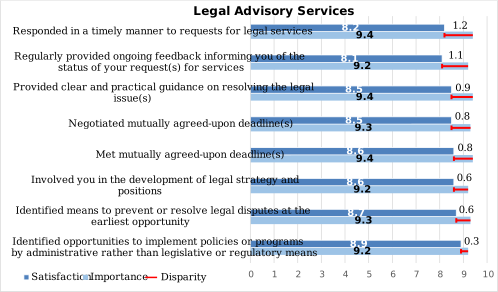
Exhibit 10: Legal Advisory Services - Satisfaction and Importance Ratings – Text version
The bar graph compares satisfaction and importance ratings for each of the Justice Canada Service Standards that were surveyed under Legal Advisory Services. Responded in a timely manner to requests for legal services featured a satisfaction rating of 8.2, an importance rating of 9.4, and a disparity between ratings of 1.2. Regularly provided ongoing feedback informing you of the status of your request(s) for services featured a satisfaction rating of 8.1, an importance rating of 9.2, and a disparity between ratings of 1.1. Provided clear and practical guidance on resolving the legal issue(s) featured a satisfaction rating of 8.5, an importance rating of 9.4, and a disparity between ratings of 0.9. Negotiated mutually acceptable deadlines featured a satisfaction rating of 8.5, an importance rating of 9.3, and a disparity between ratings of 0.8. Met mutually acceptable deadlines featured a satisfaction rating of 8.6, an importance rating of 9.4, and a disparity between ratings of 0.8. Involved you in the development of legal strategy and positions featured a satisfaction rating of 8.6, an importance rating of 9.2, and a disparity between ratings of 0.6. Identified means to prevent or resolve legal disputes at the earliest opportunity featured a satisfaction rating of 8.7, an importance rating of 9.3, and a disparity between ratings of 0.6. Identified opportunities to implement policies or programs by administrative rather than legislative or regulatory means featured a satisfaction rating of 8.9, an importance rating of 9.2, and a disparity between ratings of 0.3.
2.5.6 Comments on Legal Advisory Services Provided
As illustrated in the following exhibit, half of the 696 comments received regarding Legal Advisory Services were positive. Representative comments for this service type, presented in the language received, are featured below.
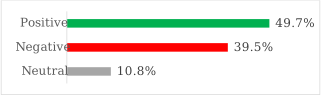
Exhibit 11: Legal Advisory Services – Responses by Sentiment Score – Text version
This bar graphs displays the percentage of positive, negative and neutral comments received specific to legal advisory services. 49.7% of the comments received were positive. 39.5% of the comments received were negative. 10.8% of the comments received were neutral.
“The degree of flexibility that has been demonstrated over the past year, particularly through such unprecedented times and shifting priorities, has been exceptional and sincerely appreciated. Most notably, our service provider has been instrumental on so many facets and consistently goes beyond in terms of their availability and the quality of services/advice rendered. Thank you.”
“I have always found legal advisory services to be extremely valuable and of high quality. The only complaint I have is with respect to the capacity of legal advisory servicers. Legal services simply does not have the resources necessary to be active in anything other than very high priority files. As such, legal advice regarding lower priority files is typically not sought, which creates risk.”
“Le bilinguisme, le charme et la démarche de haut niveau rend les discussions difficiles agréables, je voudrais féliciter mon représentant.”
“Great service and generally satisfied. Felt that the capacity of the LSU assigned to my department was limited due to workload and other competing priorities, more so than any specific fault of the person.”
“Excellent client service mentality, very dedicated to providing helpful and enabling legal services while providing frank and neutral advice on legal risks. As we work in a very technical area, a legal team with an IT background or skillset would allow our legal team to better understand the problems and operational scenarios that we require legal guidance on. That said, our LSU has invested heavily and understands our technical operating context very well relative to others with similar backgrounds or expertise owing to the time they have invested in understanding our operations and legal context.”
2.6 Litigation Services
Litigation Services are defined in the survey as services before all court levels and before administrative and inquiry bodies, domestically and internationally, including: representing the federal government in the resolution of litigious or potentially litigious matters taking into account opportunities for utilizing appropriate dispute prevention and resolution methods that promote early settlement; gathering and challenging evidence in accordance with applicable rules of evidence; and, developing legal positions and making submissions in order to preserve the interests of departments or agencies and those of the federal government as a whole. The majority (72.3%) of service users reported having received Litigation Services from the Legal Service Unit dedicated to their department or agency, and one-quarter (24.5%) reported having received Litigation Services from the National Litigation Sector (Annex G). In examining the frequency of their interactions with JUS litigation service providers, 5.4% of service users reported interactions as daily or almost daily, 15.8% reported interactions of one to two times per week, 33.6% reported interactions of one to two times per month, and 45.2% reported interactions of less than once per month.
The survey results indicated that clients were satisfied with the overall quality of the Litigation Services they received (8.5). All elements for this service type exceeded the departmental target of 8.0, with the majority (13/15) of elements featuring “strong” ratings (Annex B).
2.6.1 Accessibility/Responsiveness of Litigation Services
The rating for the accessibility/responsiveness element of Litigation Services exceeded the departmental target with a “positive” rating (Exhibit 12). In addition, satisfaction for this element has improved by a statistically significant difference since the previous cycle.
Exhibit 12: Individual Element of Accessibility/Responsiveness for Litigation Services
| Cycle IV (2020-2022) |
Cycle III (2016-2019) |
|
|---|---|---|
| Regularly provided ongoing feedback informing you of the status of your request(s) for servicesFootnote † of Exhibit 12 | 8.1 (±0.1) (Positive) |
8.0 (±0.0) (Positive) |
2.6.2 Legal Risk Management of Litigation Services
Feedback on the legal risk management service dimension was “strong” across all three elements (Exhibit 13). In addition, ratings for all three elements have improved by a statistically significant difference since the previous cycle.
Exhibit 13: Individual Elements of Legal Risk Management for Litigation Services
| Cycle IV (2020-2022) |
Cycle III (2016-2019) |
|
|---|---|---|
| Advised you of issues/developments which may impact your department/ agencyFootnote † of Exhibit 13 | 8.6 (±0.1) (Strong) |
8.4 (±0.1) (Strong) |
| Worked with you to identify legal risksFootnote † of Exhibit 13 | 8.6 (±0.1) (Strong) |
8.4 (±0.1) (Strong) |
| Incorporated your instructions in the review and development of legal options to mitigate identified legal risksFootnote † of Exhibit 13 | 8.7 (±0.1) (Strong) |
8.4 (±0.1) (Strong) |
2.6.3 Timeliness of Litigation Services
Feedback for two of the three timeliness elements received “strong” satisfaction ratings and improved by a statistically significant difference compared to the ratings of the previous cycle (Exhibit 14). The rating for the third element, responded in a timely manner to requests for legal services, has remained “positive” since the previous cycle.
Exhibit 14: Individual Elements of Timeliness for Litigation Services
| Cycle IV (2020-2022) |
Cycle III (2016-2019) |
|
|---|---|---|
| Responded in a timely manner to requests for legal services | 8.3 (±0.1) (Positive) |
8.3 (±0.1) (Positive) |
| Negotiated mutually acceptable deadlinesFootnote † of Exhibit 14 | 8.5 (±0.1) (Strong) |
8.2 (±0.1) (Positive) |
| Met mutually acceptable deadlinesFootnote † of Exhibit 14 | 8.7 (±0.1) (Strong) |
8.4 (±0.1) (Strong) |
2.6.4 Usefulness of Litigation Services
As depicted in Exhibit 15, client satisfaction ratings on the usefulness of Litigation Services were “strong” across all elements. In addition, all of the elements that make up this service dimension, save for fully prepared you to give testimony in a proceeding, improved by a statistically significant difference since the previous survey. Of note, there was a large increase in satisfaction for the Service Standard element: identified opportunities to implement policies or programs by administrative rather than legislative or regulatory means.
Exhibit 15: Individual Elements of Usefulness for Litigation Services
| Cycle IV (2020-2022) |
Cycle III (2016-2019) |
|
|---|---|---|
| Fully understood the nature of the problem/issue for which you received assistanceFootnote † of Exhibit 15 | 8.7 (±0.1) (Strong) |
8.5 (±0.1) (Strong) |
| Involved you in the development of legal strategy and positionsFootnote † of Exhibit 15 | 8.5 (±0.1) (Strong) |
8.2 (±0.1) (Positive) |
| Identified means to prevent or resolve legal disputes at the earliest opportunityFootnote † of Exhibit 15 | 8.5 (±0.1) (Strong) |
8.1 (±0.1) (Positive) |
| Provided clear and practical guidance on resolving the legal issue(s)Footnote † of Exhibit 15 | 8.4 (±0.1) (Strong) |
8.3 (±0.1) (Positive) |
| Provided consistent legal adviceFootnote † of Exhibit 15 | 8.7 (±0.1) (Strong) |
8.5 (±0.1) (Strong) |
| Identified opportunities to implement policies or programs by administrative rather than legislative or regulatory meansFootnote † of Exhibit 15 | 8.8 (±0.1) (Strong) |
7.8 (±0.1) (Moderate) |
| Fully prepared you to give testimony in a proceeding | 8.7 (±0.2) (Strong) |
8.7 (±0.2) (Strong) |
2.6.5 Service Standards – Importance
As mentioned, the extent of the disparity between the rated importance of a Service Standard and a client’s satisfaction with the Department’s performance regarding that Service Standard may identify a potential opportunity for improvement.
Exhibit 16 below (see Annex D for more detail) presents both importance and satisfaction ratings by element in order of largest to smallest disparity to provide the reader a visual representation of the disparities that were found. For Litigation Services, importance ratings ranged from 9.1 to 9.4 and satisfaction ratings ranged from 8.1 to 8.8.
For Litigation Services, the largest disparity, of magnitude 1.1, was observed for two elements: responded in a timely manner to requests for legal services and regularly provided ongoing feedback informing you of the status of your request(s) for services.
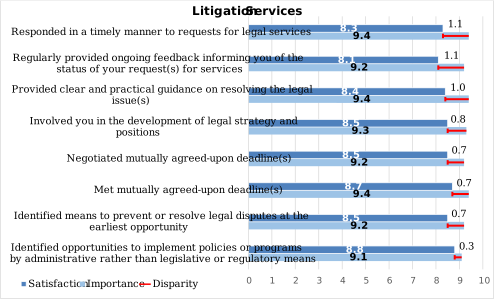
Exhibit 16: Litigation Services - Satisfaction and Importance Ratings – Text version
The bar graph compares satisfaction and importance ratings for each of the Justice Canada Service Standards that were surveyed under Litigation Services. Responded in a timely manner to requests for legal services featured a satisfaction rating of 8.3, an importance rating of 9.4, and a disparity between ratings of 1.1. Regularly provided ongoing feedback informing you of the status of your request(s) for services featured a satisfaction rating of 8.1, an importance rating of 9.2, and a disparity between ratings of 1.1. Provided clear and practical guidance on resolving the legal issue(s) featured a satisfaction rating of 8.4, an importance rating of 9.4, and a disparity between ratings of 1.0. Involved you in the development of legal strategy and positions featured a satisfaction rating of 8.5, an importance rating of 9.3, and a disparity between ratings of 0.8. Negotiated mutually acceptable deadlines featured a satisfaction rating of 8.5, an importance rating of 9.2, and a disparity between ratings of 0.7. Met mutually acceptable deadlines featured a satisfaction rating of 8.7, an importance rating of 9.4, and a disparity between ratings of 0.7. Identified means to prevent or resolve legal disputes at the earliest opportunity featured a satisfaction rating of 8.5, an importance rating of 9.2, and a disparity between ratings of 0.7. Identified opportunities to implement policies or programs by administrative rather than legislative or regulatory means featured a satisfaction rating of 8.8, an importance rating of 9.1, and a disparity between ratings of 0.3.
2.6.6 Comments on Litigation Services Provided
As illustrated in the following exhibit, roughly half of the 219 comments received regarding Litigation Services were positive. Representative comments for this service type, presented in the language received, are included below.
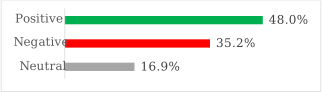
Exhibit 17: Litigation Services – Responses by Sentiment Score – Text version
This bar graphs displays the percentage of positive, negative and neutral comments received specific to litigation services. 48% of the comments received were positive. 35.2% of the comments received were negative. 16.9% of the comments received were neutral.
“Our dealings with the litigation sector have been consistently positive. The lawyers are knowledgeable, good at understanding our programs and issues, are timely with responses, give good advice, and have done well in court.”
“It’s my sense that there is a significant shortage of litigators and that those available are extremely overtasked, which are the reasons why support to my project have at times fallen short of requirements. The services provided have in general been outstanding, but not timely. I suggest the best way to recruit and retain top talent, not burn them out, and allow them to deliver timely support services to their clients, is to have more of them.”
“My case was extremely challenging given the covid times that we live in. Yet the litigator was able to resolve my case at the federal court and the follow up issues that came out of the court’s decision. In addition, they volunteered to speak about the case at a virtual learning event I coordinated. The service was excellent.”
“Highly profession and competent people. I may not always be happy about the timelines, but that is likely due to workload. However, the quality of services is always excellent.”
“Les services reçus du services de contentieux au cours de la dernière année ont été encore une fois des plus professionnels. La rapidité, la précision et les explications aux réponses fournies à nos demandes ont été fort appréciées. Nous nous sentons entre très bonnes mains. Merci.”
2.7 Legislative Drafting Services
Legislative Drafting Services are defined in the survey as drafting bills and motions to amend bills before Parliament, all in accordance with Cabinet instructions and applicable directives, established drafting conventions and the requirements of Canada’s bilingual and bijural legal system, as well as certifying that federal government bills are not inconsistent with the Canadian Charter of Rights and Freedoms and the Canadian Bill of Rights. The majority (86.9%) of service users reported having received Legislative Drafting Services from the Legislative Services Branch (Annex G). On average, 55.2% of legislative drafting projects lasted zero to six months; 24.4% lasted six to twelve months and 20.3% lasted greater than a year. For the majority of drafting projects, service users reported that policy development had been completed to a great extent (61.1%) prior to requesting legislative drafting services (26.1% reported a moderate extent, 10.0% reported a lesser extent and 2.8% reported not at all). Most legislative drafting service users reported being actively involved in only one legislative drafting project within the 12 months prior to being surveyed, with about one-third (33.9%) being involved in two or more legislative drafting projects.
The survey results indicated that clients of Legislative Drafting Services were satisfied with the overall quality (8.6) of services they received. All 12 elements specific to Legislative Drafting Services exceeded the departmental target of 8.0 with “strong” ratings (Annex B).
2.7.1 Accessibility/Responsiveness of Legislative Drafting Services
The rating for the accessibility/responsiveness element of Legislative Drafting Services was “strong”.
Exhibit 18: Individual Element of Accessibility/Responsiveness for Legislative Drafting Services
| Cycle IV (2020-2022) |
Cycle III (2016-2019) |
|
|---|---|---|
| Regularly provided ongoing feedback informing you of the status of your request(s) for services | 8.4 (±0.2) (Strong) |
8.3 (±0.2) (Positive) |
2.7.2 Legal Risk Management of Legislative Drafting Services
All three legal risk management elements continued to feature “strong” ratings.
Exhibit 19: Individual Elements of Legal Risk Management for Legislative Drafting Services
| Cycle IV (2020-2022) |
Cycle III (2016-2019) |
|
|---|---|---|
| Advised you of issues/developments which may impact your department/agency | 8.6 (±0.2) (Strong) |
8.5 (±0.2) (Strong) |
| Worked with you to identify legal risks | 8.7 (±0.2) (Strong) |
8.5 (±0.2) (Strong) |
| Reflected your policy intent in the review and development of legal options to mitigate identified legal risks | 8.7 (±0.2) (Strong) |
8.6 (±0.2) (Strong) |
2.7.3 Timeliness of Legislative Drafting Services
Feedback for all three timeliness elements received “strong” satisfaction ratings (Exhibit 20). In addition, one of the three elements have improved by a statistically significant difference since the previous cycle.
Exhibit 20: Individual Elements of Timeliness for Legislative Drafting Services
| Cycle IV (2020-2022) |
Cycle III (2016-2019) |
|
|---|---|---|
| Responded in a timely manner to requests for legal services | 8.5 (±0.2) (Strong) |
8.4 (±0.2) (Strong) |
| Negotiated mutually acceptable deadlines | 8.5 (±0.3) (Strong) |
8.2 (±0.2) (Positive) |
| Met mutually acceptable deadlinesFootnote † of Exhibit 20 | 8.8 (±0.2) (Strong) |
8.5 (±0.2) (Strong) |
2.7.4 Usefulness of Legislative Drafting Services
As depicted in Exhibit 21, client satisfaction ratings on the usefulness of Legislative Drafting Services were “strong” for all four elements.
Exhibit 21: Individual Elements of Usefulness for Legislative Drafting Services
| Cycle IV (2020-2022) |
Cycle III (2016-2019) |
|
|---|---|---|
| Fully understood the nature of the problem/ issue for which you received assistance | 8.7 (±0.2) (Strong) |
8.5 (±0.2) (Strong) |
| Proposed appropriate solutions for legal and drafting issues raised | 8.6 (±0.2) (Strong) |
8.4 (±0.2) (Strong) |
| Developed legislative drafting options appropriate to your policy and program objectives | 8.7 (±0.2) (Strong) |
8.4 (±0.2) (Strong) |
| Provided consistent legal advice | 8.5 (±0.3) (Strong) |
8.5 (±0.2) (Strong) |
2.7.5 Service Standards - Importance
The extent of the disparity between the rated importance of a Service Standard and a client’s satisfaction with the Department’s performance regarding that Service Standard may identify a potential opportunity for improvement.
Exhibit 22 (see Annex D for more detail) presents both importance and satisfaction ratings by element in order of largest to smallest disparity. For Legislative Drafting Services, importance ratings ranged from 8.9 to 9.3 and satisfaction ratings ranged from 8.4 to 8.8.
For this service type, the largest disparity, of magnitude 0.7, was observed for three elements.
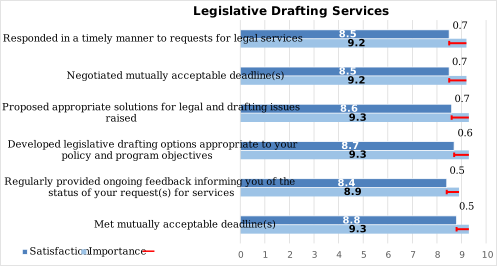
Exhibit 22: Legislative Drafting Services - Satisfaction and Importance Ratings – Text version
The bar graph compares satisfaction and importance ratings for each of the Justice Canada Service Standards that were surveyed under Legislative Drafting Services. Responded in a timely manner to requests for legal services featured a satisfaction rating of 8.5, an importance rating of 9.2, and a disparity between ratings of 0.7. Negotiated mutually acceptable deadlines featured a satisfaction rating of 8.5, an importance rating of 9.2, and a disparity between ratings of 0.7. Proposed appropriate solutions for legal and drafting issues raised featured a satisfaction rating of 8.6, an importance rating of 9.3, and a disparity between ratings of 0.7. Developed legislative drafting options appropriate to your policy and program objectives featured a satisfaction rating of 8.7, an importance rating of 9.3, and a disparity between ratings of 0.6. Regularly provided ongoing feedback informing you of the status of your request(s) for services featured a satisfaction rating of 8.4, an importance rating of 8.9, and a disparity between ratings of 0.5. Met mutually acceptable deadlines featured a satisfaction rating of 8.8, an importance rating of 9.3, and a disparity between ratings of 0.5.
2.7.6 Comments on Legislative Drafting Services Provided
As illustrated in the following exhibit, just over half of the 22 comments received regarding Legislative Drafting Services were positive. Representative comments for this service type, presented in the language received, are included below.
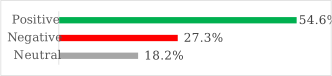
Exhibit 23: Legislative Drafting Services – Responses by Sentiment Score – Text version
This bar graphs displays the percentage of positive, negative and neutral comments received specific to legislative drafting services. 54.6% of the comments received were positive. 27.3% of the comments received were negative. 18.2% of the comments received were neutral.
“En premier lieu, je suis très satisfait des services que nous recevons de notre conseiller juridique. Par ailleurs, je suis très impressionné par la compétence des conseillers et des rédacteurs juridiques. Merci pour l’appui et le travail acharné qui a mené à mon avis à des propositions de modifications de la loi solides.”
“Several changes in drafting counsel assigned to our file, during a period due to a pause at the start of pandemic, resulted in some different advice during drafting.”
“The drafters I worked with were extremely diligent, found solutions to problems, and met almost all of our extremely pressing timelines. They maintained their professionalism and delivered on results. They provided services that exactly matched our needs, which were at times unrealistic.”
“The only challenge is that there are not enough drafters to meet the ambitious government agenda.”
“I would like to sincerely thank the entire legislative drafting services team for their excellent and unwavering service. I have had the pleasure of working with many drafting teams over a number of years, both directly and indirectly, and without exception, it has always been a positive and productive experience, even when the requirements are difficult. In addition to the quality of the advice and drafting, I have always appreciated each team’s patience, openness and highly professional manner in the drafting room. Thank you, and I hope you get a rest.”
2.8 Regulatory Drafting Services
Regulatory Drafting services is defined in the survey as drafting and examination of regulations and statutory instruments in accordance with applicable laws and established drafting conventions as well as providing regulatory policy advice, legal opinions and risk analysis on regulatory proposals within the context of a regulatory drafting file. The majority (65.3%) of service users reported having received Regulatory Drafting Services from the Legal Service Unit dedicated to their department or agency, and nearly one-quarter (23.9%) reported having received services from the Headquarters Regulations Section of the Legislative Services Branch (Annex G). Most service users (56.2%) reported being actively involved in more than one regulatory drafting project within the 12 months prior to being surveyed. For the majority of drafting projects, service users reported that policy development had been completed to a great extent (58.4%) prior to requesting regulatory drafting services (28.8% reported a moderate extent, 8.9% reported a lesser extent and 3.9% reported not at all).
The survey results indicated that clients of Regulatory Drafting Services were satisfied with the overall quality (8.6) of services they received. All elements exceeded the departmental target of 8.0 and the majority (10/12) featured “strong” ratings (Annex B).
2.8.1 Accessibility/Responsiveness of Regulatory Drafting Services
The satisfaction rating for the accessibility/responsiveness element of Regulatory Drafting Services increased by a statistically significant difference from “moderate’ to “positive” since the previous survey cycle (Exhibit 24).
Exhibit 24: Individual Element of Accessibility/Responsiveness for Regulatory Drafting Services
| Cycle IV (2020-2022) |
Cycle III (2016-2019) |
|
|---|---|---|
| Regularly provided ongoing feedback informing you of the status of your request(s) for servicesFootnote † of Exhibit 24 | 8.3 (±0.2) (Positive) |
7.7 (±0.2) (Moderate) |
2.8.2 Legal Risk Management of Regulatory Drafting Services
Feedback on all three legal risk management elements were “strong” and have improved by a statistically significant difference since the previous cycle.
Exhibit 25: Individual Elements of Legal Risk Management for Regulatory Drafting Services
| Cycle IV (2020-2022) |
Cycle III (2016-2019) |
|
|---|---|---|
| Advised you of issues/developments which may impact your department/agencyFootnote † of Exhibit 25 | 8.7 (±0.1) (Strong) |
8.4 (±0.1) (Strong) |
| Worked with you to identify legal risksFootnote † of Exhibit 25 | 8.7 (±0.1) (Strong) |
8.3 (±0.1) (Positive) |
| Reflected your policy intent in the review and development of legal options to mitigate identified legal risksFootnote † of Exhibit 25 | 8.7 (±0.1) (Strong) |
8.4 (±0.1) (Strong) |
2.8.3 Timeliness of Regulatory Drafting Services
Ratings for two of the three timeliness elements were “strong” (Exhibit 26). In addition, all three elements have improved by a statistically significant difference since the previous cycle.
Exhibit 26: Individual Elements of Timeliness for Regulatory Drafting Services
| Cycle IV (2020-2022) |
Cycle III (2016-2019) |
|
|---|---|---|
| Responded in a timely manner to requests for legal servicesFootnote † of Exhibit 26 | 8.3 (±0.2) (Positive) |
7.8 (±0.2) (Moderate) |
| Negotiated mutually acceptable deadlinesFootnote † of Exhibit 26 | 8.5 (±0.2) (Strong) |
7.7 (±0.2) (Moderate) |
| Met mutually acceptable deadlinesFootnote † of Exhibit 26 | 8.6 (±0.2) (Strong) |
8.0 (±0.2) (Positive) |
2.8.4 Usefulness of Regulatory Drafting Services
As depicted in Exhibit 27, client satisfaction ratings on the usefulness of Regulatory Drafting Services were “strong”. In addition, ratings have improved by a statistically significant difference compared to the previous cycle.
Exhibit 27: Individual Elements of Usefulness for Regulatory Drafting Services
| Cycle IV (2020-2022) |
Cycle III (2016-2019) |
|
|---|---|---|
| Fully understood the nature of the problem/ issue for which you received assistanceFootnote † of Exhibit 27 | 8.7 (±0.1) (Strong) |
8.4 (±0.1) (Strong) |
| Proposed appropriate solutions for legal and drafting issues raisedFootnote † of Exhibit 27 | 8.7 (±0.1) (Strong) |
8.2 (±0.1) (Positive) |
| Developed regulatory drafting options appropriate to your policy and program objectivesFootnote † of Exhibit 27 | 8.7 (±0.1) (Strong) |
8.2 (±0.2) (Positive) |
| Provided consistent legal adviceFootnote † of Exhibit 27 | 8.7 (±0.1) (Strong) |
8.3 (±0.1) (Positive) |
2.8.5 Service Standards - Importance
The extent of the disparity between the rated importance of a Service Standard and a client’s satisfaction with the Department’s performance regarding that Service Standard may identify a potential opportunity for improvement.
Exhibit 28 below (see Annex D for more detail) presents both importance and satisfaction ratings by element in order of largest to smallest disparity. For Regulatory Drafting Services, importance ratings ranged from 9.2 to 9.4 and satisfaction ratings ranged from 8.3 to 8.7.
As observed, the largest disparity, of magnitude 1.0, was found for the element: responded in a timely manner to requests for legal services.
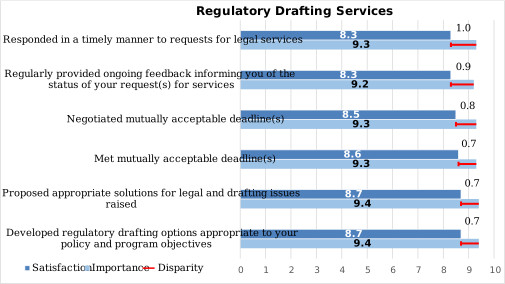
Exhibit 28: Regulatory Drafting Services - Satisfaction and Importance Ratings – Text version
The bar graph compares satisfaction and importance ratings for each of the Justice Canada Service Standards that were surveyed under Regulatory Drafting Services. Responded in a timely manner to requests for legal services featured a satisfaction rating of 8.3, an importance rating of 9.3, and a disparity between ratings of 1.0. Regularly provided ongoing feedback informing you of the status of your request(s) for services featured a satisfaction rating of 8.3, an importance rating of 9.2, and a disparity between ratings of 0.9. Negotiated mutually acceptable deadlines featured a satisfaction rating of 8.5, an importance rating of 9.3, and a disparity between ratings of 0.8. Met mutually acceptable deadlines featured a satisfaction rating of 8.6, an importance rating of 9.3, and a disparity between ratings of 0.7. Proposed appropriate solutions for legal and drafting issues raised featured a satisfaction rating of 8.7, an importance rating of 9.4, and a disparity between ratings of 0.7. Developed Regulatory drafting options appropriate to your policy and program objectives featured a satisfaction rating of 8.7, an importance rating of 9.4, and a disparity between ratings of 0.7.
2.8.6 Comments on Regulatory Drafting Services Provided
As illustrated in the following exhibit, nearly half of the 71 comments received regarding Regulatory Drafting Services were positive. Representative comments for this service type, presented in the language received, are included below.
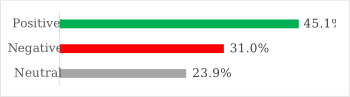
Exhibit 29: Regulatory Drafting Services – Responses by Sentiment Score – Text version
This bar graphs displays the percentage of positive, negative and neutral comments received specific to Regulatory drafting services. 45.1% of the comments received were positive. 31% of the comments received were negative. 23.9% of the comments received were neutral.
“Both the English and French jurilinguists were excellent, and made every effort to understand the policy intent and propose language that would reflect this intent. They were highly pleasant, professional and efficient as they supported our department to draft ministerial orders in support of the pandemic. Thank you.”
“My experience with the drafting unit has overall been excellent. Helpful advice and most often solution-oriented. Sometimes the time to get files drafted has been long and I suspect it simply has to do with capacity given high volume regulatory agenda. Would very much like to see increased capacity.”
“Our regulatory drafters were extremely knowledgeable, nimble, and responsive to our needs and accelerated timelines. They took time to explain potential problems and identify suitable paths forward. The only small negative was that we had some shuffling of drafters on occasions, which temporarily slowed some work and somewhat disrupted the continuity of commentary.”
“Très bon service, mais ils ont manifestement besoin de ressource.”
“Our drafters were excellent, very professional and dedicated to their work. They worked very hard to understand the technical complexities of the regulation we were developing. They listened carefully, asked questions and were open to trying new things. They provided predictable and reasonable timelines and were willing to work with us to find the most effective and efficient ways of making progress. We were very fortunate to have them.”
- Date modified: